Creating an Inclusive Classroom Environment for All Learners in 2027
18 April 2026
Let’s be honest: the traditional classroom model is running on fumes. We’ve all seen it—the one-size-fits-all approach where the teacher stands at the front, delivers a monologue, and hopes the information sticks to thirty different brains, all wired uniquely. It’s like serving the same meal to thirty people without asking about allergies, dietary preferences, or even if they’re hungry. By 2027, this simply won’t cut it. The future of education isn't about finding a better "average" to teach to; it's about systematically dismantling the barriers that prevent any single learner from thriving. Creating an inclusive classroom environment by 2027 means building a learning ecosystem that is as dynamic and diverse as the students who enter it.
This isn't just a nice-to-have, a box to tick for a school inspection report. It’s an urgent pedagogical imperative. We’re talking about a fundamental redesign of space, curriculum, assessment, and most importantly, mindset. So, what will this actually look like in the tangible world of 2027? Let’s move beyond the buzzwords and into the blueprint.

Beyond Physical Accessibility: The Multi-Sensory Learning Space
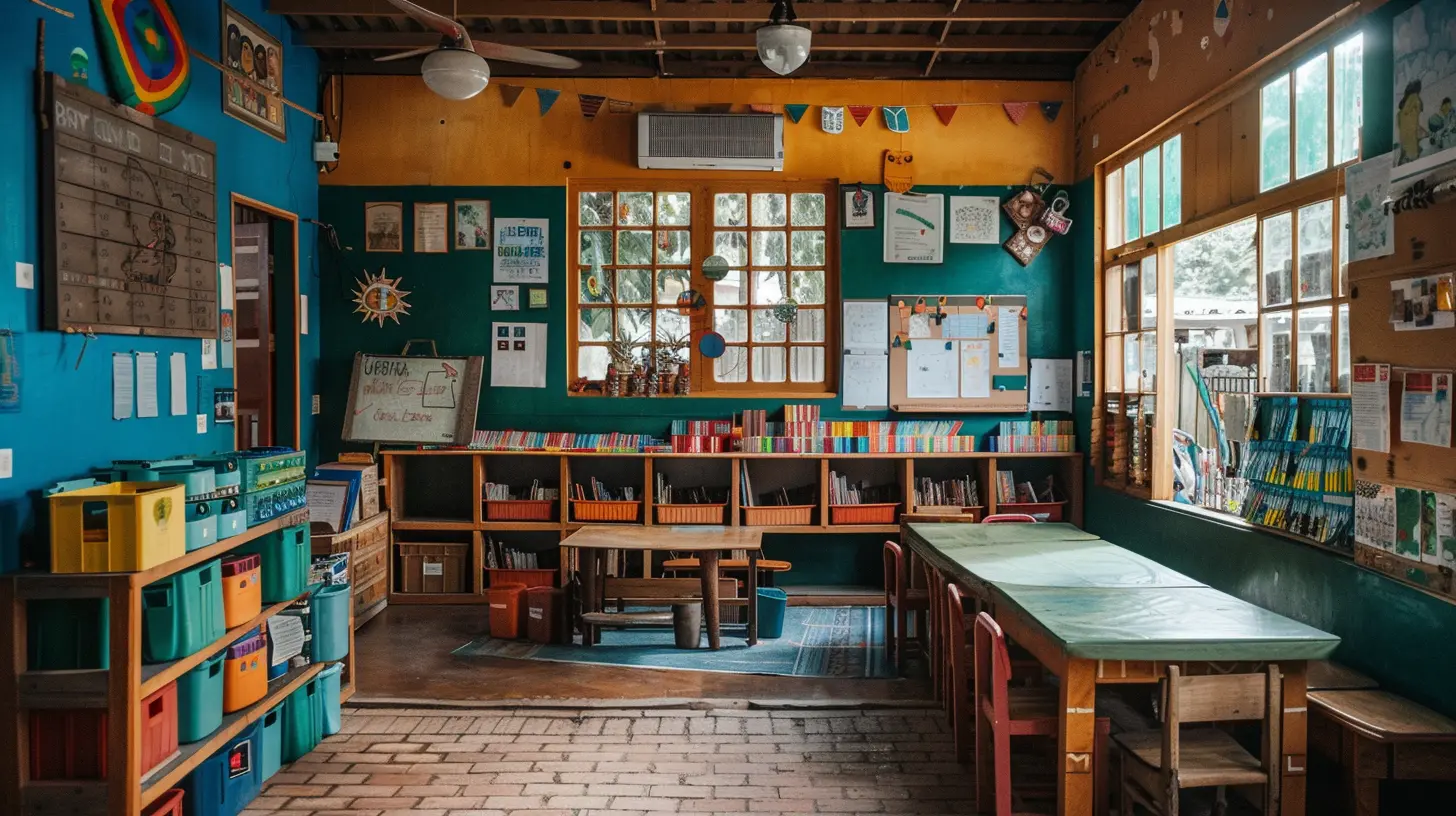
When we hear "inclusive classroom," our mind often jumps to wheelchair ramps and widened doorways. While physical accessibility remains a non-negotiable foundation, the inclusive classroom of 2027 will engage all senses and cognitive pathways. Think of it as designing a symphony, not just a lecture.The classroom itself will become a responsive partner. Lighting will be dynamically adjustable, shifting from bright, energizing cool tones for group work to warm, softer glows for independent reading, accommodating students with sensory processing differences or migraines. Acoustic panels and sound-field systems will be as standard as whiteboards, ensuring that a teacher’s voice or a peer’s contribution is crystal clear to a child with auditory processing disorder or one sitting at the back.
Furniture will be agile and purposeful. You’ll see a landscape of options: standing desks, wobble stools, floor seating with back supports, and quiet, semi-enclosed "focus pods" for those who need a retreat from sensory overload. The message is clear: "How you learn best is valid here." The environment itself whispers, "Your comfort and ability to focus are important to your learning."
The End of the Static Curriculum: AI as a Co-Pilot for Personalization
Here’s where the 2027 classroom truly diverges from its predecessors. The curriculum will no longer be a rigid, linear track that everyone must follow at the same pace. Instead, imagine a dynamic, branching network of learning objectives. This is where Artificial Intelligence transitions from a sci-fi concept to a practical, everyday co-pilot for educators.AI-driven platforms won’t replace teachers; they’ll empower them. These tools will perform real-time diagnostics, identifying not just what a student got wrong, but why. Did Maria struggle with the algebra problem because she didn’t grasp the distributive property, or because her dyslexia made her misread a critical symbol? The AI flags this for the teacher and simultaneously offers Maria a alternative resource: perhaps a short, visual video explaining the concept, or an interactive module that uses manipulatives.
For advanced learners, the system can automatically suggest deeper inquiry projects or connect them to relevant external resources, like academic journals or expert interviews. The teacher, freed from the Herculean task of creating thirty individual lesson plans daily, becomes a learning conductor. They use the AI’s data to form fluid, needs-based small groups, provide targeted one-on-one mentorship, and design rich, collaborative projects that apply core skills. The curriculum bends to the learner, not the other way around.

Universal Design for Learning (UDL): The Blueprint, Not the Add-On
By 2027, Universal Design for Learning (UDL) will be the foundational architecture of all lesson planning, as standard as considering learning objectives is today. UDL’s core principle—providing multiple means of Engagement, Representation, and Action & Expression—will be baked into every unit.Let’s break that down. Multiple means of Engagement means hooking student interest in varied ways. A history lesson on ancient Egypt might start with a choice: analyze a primary source text, explore a 3D virtual reconstruction of the Giza plateau, or listen to a podcast dramatizing a pharaoh’s decision. The "why" of learning is personalized.
Multiple means of Representation is about content delivery. Text is no longer king. Core information will be available simultaneously as text, audio narration, infographics, and concise video summaries. A student with dyslexia can listen; a visual learner can study the chart; an English Language Learner can access translated vocabulary supports embedded in the digital text. Everyone accesses the same core ideas through their optimal channel.
Finally, Multiple means of Action & Expression revolutionizes assessment. How do you prove you understand the causes of the Civil War? You could write a traditional essay. Or you could create a documentary podcast, code an interactive timeline, design a museum exhibit layout, or debate in a structured forum. The goal is to assess the mastery of the concept, not the student’s ability to perform one specific, narrow skill (like timed essay writing). This inherently includes learners with motor disabilities, speech differences, or social anxiety, allowing them to shine through their strengths.

The Social-Emotional Core: Inclusion as a Felt Experience
All the technology and design in the world are meaningless if a student doesn’t feel psychologically safe, valued, and belonging. In 2027, social-emotional learning (SEL) won’t be a 20-minute weekly module; it will be the classroom’s operating system.This means explicit, daily practice in empathy, perspective-taking, and collaborative problem-solving. Class meetings will be a staple, not for logistics, but for community building. Students will learn to use "I feel" statements, engage in active listening exercises, and collectively establish classroom norms that celebrate neurodiversity. Think of it as building a team where one player’s attention to detail, another’s big-picture creativity, and another’s methodical process are all seen as crucial to the group’s success.
The teacher’s role morphs into that of a cultural architect. They will model vulnerability, normalize struggle, and consistently use identity-affirming language. They will proactively teach about different communication styles (direct vs. indirect, neurotypical vs. neurodivergent) and learning differences, demystifying them for all students. When a peer stims for self-regulation or uses a text-to-speech device, it’s understood not as a distraction or a special privilege, but as simply how they learn. The classroom culture moves from tolerance to authentic appreciation.
The Educator of 2027: Facilitator, Data Navigator, and Community Weaver
This seismic shift demands a new kind of educator. The "sage on the stage" model is completely obsolete. The 2027 teacher is a facilitator of learning journeys, a navigator of rich data from AI tools, and a weaver of community.Their professional development will be continuous, focused on interpreting neurodiversity-affirming practices, managing flexible learning environments, and leveraging assistive technologies. They will collaborate constantly with specialists—speech therapists, occupational therapists, cultural liaisons—not in isolated meetings, but in integrated planning sessions. Their expertise lies in connecting the dots: between a student’s passion for gaming and a physics standard, between a quiet student’s insightful written reflection and the class discussion, between a family’s cultural wealth and the curriculum.
The Path Forward: It Starts Now
The inclusive classroom of 2027 isn't a distant fantasy. It’s being built today in the schools that are brave enough to question every "this is how we’ve always done it." It requires investment—in technology, in flexible furniture, and most critically, in teacher training and time for collaboration.The goal is audacious but simple: to create a space where every single learner, regardless of how their brain is wired, how their body moves, how they communicate, or where they come from, can walk in and think, "This is a place built for someone like me to succeed." It’s about moving from retrofit to redesign, from accommodation to inclusion. By 2027, let’s make the inclusive classroom not the exception, but the rule. The future of learning depends on it, and frankly, our students deserve nothing less.
all images in this post were generated using AI tools
Category:
Classroom ManagementAuthor:

Olivia Lewis
Discussion
rate this article
2 comments
Katie Rosales
This article highlights important strategies for fostering inclusivity in classrooms. Emphasizing diverse learning needs will not only benefit students but also enhance overall educational experiences for everyone involved.
May 11, 2026 at 4:58 AM
Olivia Lewis
Thank you for your thoughtful observation. I agree that acknowledging diverse learning needs is crucial for building an inclusive classroom. It truly enriches the educational experience for all.
Asher Barrett
In fostering an inclusive classroom, embracing diverse perspectives enriches learning, empowers student voice, and cultivates a community where every learner thrives.
April 18, 2026 at 2:58 AM
Olivia Lewis
Absolutely! Diverse perspectives are key to creating a classroom where every student feels valued and engaged. It truly enhances the learning experience for all.