Future-Proof Yourself: The 2027 Skills Forecast
20 May 2026
Let's be honest for a second. Looking at the job market right now feels a bit like trying to read the menu at a drive-through while doing sixty miles an hour. Everything is blurry, and you're pretty sure you just passed the exit for "Stable Career Lane" about three years ago. You hear the robots are coming for your job, AI is writing your emails, and someone on LinkedIn is telling you that you need to learn blockchain, quantum computing, and how to juggle flaming torches to stay relevant.
Relax. I'm not here to scare you. I'm here to give you a map. We're talking about 2027. That's not some far-off sci-fi fantasy. That's three years from now. If you're reading this in 2024, that means by the time you're planning your 2027 summer vacation, the landscape of work will look noticeably different. But here's the good news: you don't need to be a genius or a coder to survive. You just need to be smart about where you place your bets.
This isn't about predicting the future with a crystal ball. It's about looking at the trends that are already screaming at us and figuring out which human skills actually get more valuable as machines get smarter. Think of this as your personal survival guide for the next three years. Let's dive in.
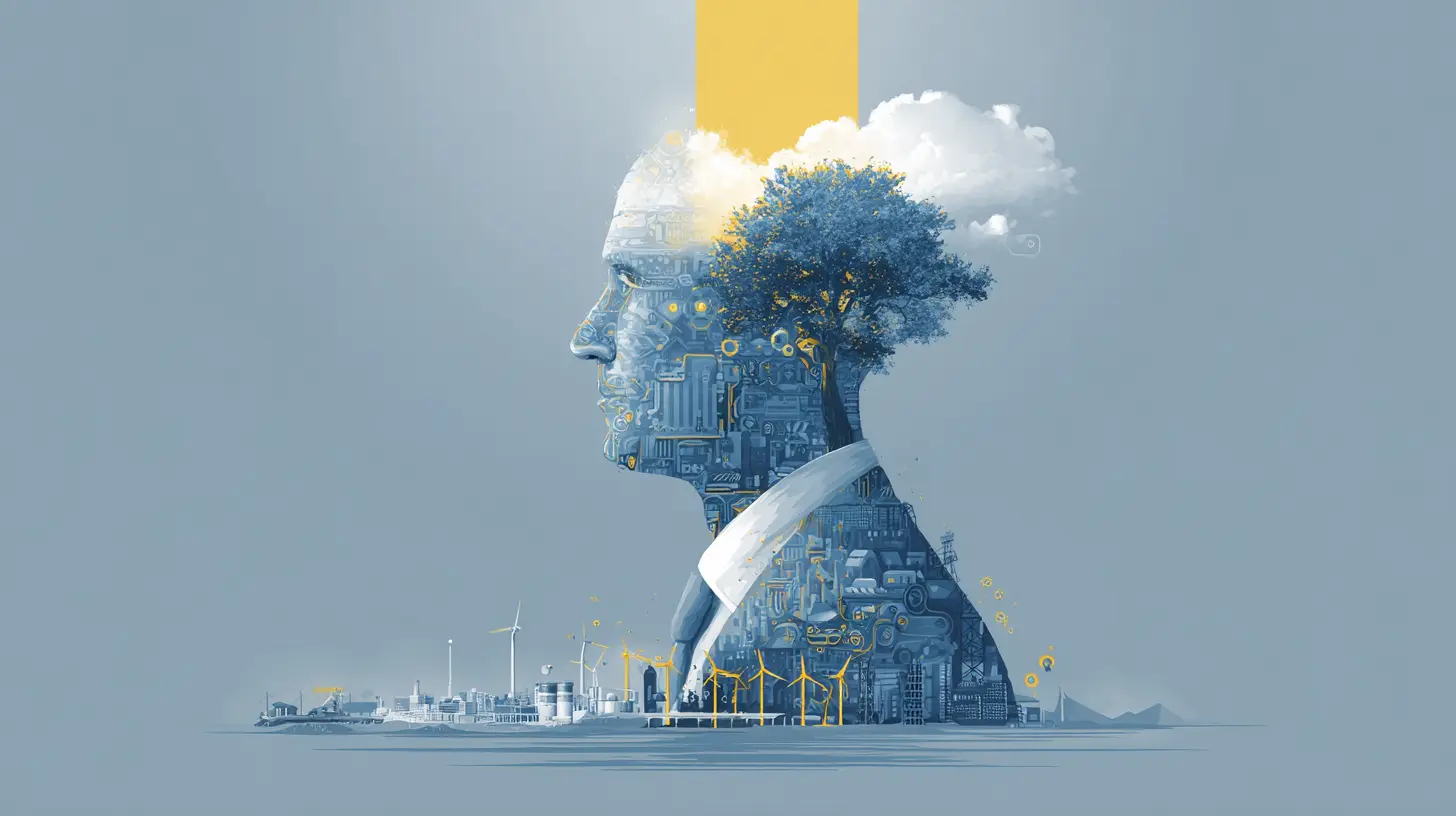
Why 2027? The Three-Year Horizon
Why not 2030? Why not next year? Because three years is the sweet spot for planning. It's long enough to learn a genuinely new skill, but short enough that the predictions aren't total guesswork. By 2027, the generative AI boom we saw in 2023 and 2024 will have matured. The hype will have settled, and the real, boring, practical applications will be everywhere.Imagine the difference between the iPhone launch in 2007 and where we were in 2010. By 2010, everyone had one, the app store was a beast, and we were all addicted to Angry Birds. The same thing is happening with AI right now. By 2027, using AI tools will be as normal as using a search engine. The question won't be "Can you use AI?" It will be "What can you do with AI that adds real value?"
So, the skills we need to focus on aren't just about using the new tool. They are about the human layer on top of the technology. The layer that the machine can't replicate.

The Human Premium: Skills That Get More Valuable
Let's get one thing straight. The idea that humans will be obsolete is a lazy take. Yes, machines can process data faster. They can write a decent blog post (sorry, maybe I should be worried!). They can analyze a spreadsheet in seconds. But they are terrible at being human.Think of it like this: AI is a brilliant, tireless intern who knows every fact in the world but has zero common sense, zero intuition, and zero ability to read a room. Your job in 2027 is to be the manager of that intern. You need to know what questions to ask it, how to judge its work, and when to throw its perfect, data-driven answer out the window because you just know it feels wrong.
Here are the specific skills that will pay the premium in 2027.
#
1. Critical Ignorance: Knowing What to Ignore
We talk a lot about critical thinking. That's table stakes. The new superpower is what I call "Critical Ignorance." It's the art of knowing what information is not worth your time.In 2027, the firehose of information will be a tsunami. AI can generate a thousand reports, a hundred marketing strategies, and fifty different ways to solve a problem in the time it takes you to drink your coffee. The skill isn't finding information. That's easy. The skill is filtering it.
You need to become a ruthless editor of your own attention. This means asking brutal questions: Is this data accurate, or is it a hallucination from the AI? Is this trend real, or is it just a viral blip? Is this email from a real person or a bot? More importantly, does this information actually move me toward my goal?
This is a deeply human skill. It relies on context, experience, and a bit of gut feeling. Machines can weigh evidence. They struggle to weigh relevance in the messy, emotional context of a real business problem. If you can look at a pile of AI-generated data and say, "That's interesting, but it's the wrong question," you are irreplaceable.
#
2. The Art of the Prompt: Conversational Programming
I know, "prompt engineering" sounds like a buzzword that will be dead in a year. But the core skill behind it is not going away. We are moving from a world of "point and click" to a world of "ask and refine."Think of it like this: In the past, you used a calculator by pressing buttons. In the future, you use a computer by having a conversation. The skill is learning how to have that conversation effectively. It's not about memorizing weird syntax. It's about clarity, iteration, and specificity.
Can you explain a complex problem to an AI in a way that it understands? Can you give it a bad output and then give it feedback that makes it better? "No, that's too formal. Make it sound like a conversation with a friend. Now add a sense of urgency. Now cut the jargon."
This is teaching, not programming. It's the ability to transfer your human intention into a machine-readable instruction. And then to debug the machine's misunderstanding. In 2027, the person who can get a useful result from an AI in three prompts instead of thirty will be the most productive person in the room.
#
3. Systems Thinking for a Chaotic World
We live in a world of interconnected messes. A supply chain issue in Vietnam affects the price of your groceries in Ohio. A change in an algorithm on a social media platform can tank a small business. A new AI model can make a whole job category obsolete overnight.Systems thinking is the ability to zoom out and see the whole picture. It's understanding that your small part of a project is connected to everyone else's. It's asking "What happens next?" and "What is the second-order effect?"
AI is great at optimizing a single part of a system. It can make your logistics route 5% more efficient. But it is terrible at seeing how that optimization might break something else in the system. Humans are the ones who can say, "Yes, that route is faster, but it uses a supplier we have a bad relationship with, and it might mess up our carbon footprint report."
This skill is about pattern recognition on a macro scale. It's about seeing the forest, not just the trees. In a world of hyper-specialized AI agents, the generalist who can connect the dots between them will be the most valuable leader.
#
4. Emotional Granularity and High-Stakes Empathy
Let's talk about feelings. Yes, I know it sounds soft. But this is where humans absolutely destroy machines. AI can detect sentiment. It can tell you if a customer review is positive or negative. But it cannot feel.The future skill is not just empathy-it's emotional granularity. That means being able to understand the specific emotion someone is feeling. Is that client frustrated, or are they scared? Is that team member lazy, or are they burned out? Is that boss being difficult, or are they under pressure from their boss?
In a world where we interact with chatbots for 80% of our daily tasks, the human interactions that remain will be the high-stakes ones. The difficult conversation. The negotiation. The moment of crisis. The act of inspiring a team.
These moments require a nuanced, real-time, embodied understanding of another person. A machine can give you a script for a difficult conversation. It cannot look someone in the eye, notice the micro-expression of sadness, and adjust the entire conversation on the fly. That's you. That's your job security.
#
5. The "Last Mile" Translation
There is a massive gap between what a machine can produce and what is actually useful to a human. This gap is the "last mile." It's the translation of raw data into a story, a decision, or a feeling.Think of a data analyst who can run a query and get a perfect report. That's the easy part. The hard part is taking that report to the CEO and saying, "Here's what this means for our strategy, and here's why we should be worried." That's the translation.
Or think of an AI that can generate a beautiful piece of code. The human skill is explaining to the client why that code solves their problem in plain English. It's the translation from tech-speak to human-speak.
In 2027, the ability to be a "translator" between the world of machines and the world of humans will be a goldmine. Can you take a complex AI analysis and turn it into a compelling one-page memo? Can you take a client's vague, emotional request and turn it into a clear prompt for a machine? That is pure, unadulterated human value.
The Practical Roadmap: How to Start Today
Okay, this all sounds great in theory. But how do you actually learn to be a systems thinker or a high-empathy communicator? You don't take a class in "Emotional Granularity 101." Here's a practical, messy, human approach.Start with the friction.
Every time you feel frustrated with a tool, a process, or a conversation, stop. Ask yourself: "What is the human skill that is missing here?" That frustration is a signal. If you're annoyed that an AI gave you a bad answer, the skill you need to practice is prompt refinement. If you're annoyed that a meeting is going nowhere, the skill you need is facilitation and emotional reading.
Do the hard thing.
The easiest path is to let the AI do everything. Don't. Force yourself to write the first draft of a difficult email before you ask it for help. Force yourself to solve a problem on paper before you ask it for code. This builds the muscle of your own intuition. You need to know what a good answer looks like before you can judge the machine's answer.
Read widely and weirdly.
Systems thinking comes from making unexpected connections. Read a book on biology, then a book on marketing. Read a history of the Roman Empire, then a report on supply chain logistics. Your brain will start making connections that no machine can. It's like cross-training for your mind.
Practice the difficult conversation.
You can't learn high-stakes empathy from a YouTube video. You have to do it. The next time you have a conflict with a colleague or a friend, don't avoid it. Lean in. Try to name the specific emotion you think they are feeling. Ask them if you're right. You will get it wrong a lot. That's how you learn the granularity.
Become a feedback machine.
The core of prompt engineering is feedback. Apply that to your human life. When someone gives you a presentation, give them specific, useful feedback. "The second slide was confusing because the data didn't match the headline." This trains your ability to see the gap between intention and execution. It's the same skill you use with an AI.
The Myth of the "Safe" Job
Let's talk about the elephant in the room. Is there a "safe" job in 2027? No. There are only safe skill sets.A job title is a temporary container. "Accountant" might mean something very different in 2027 than it did in 2017. "Graphic Designer" might be a prompt-wrangler who directs a fleet of AI artists. "Doctor" might be a data-interpreter who manages a team of diagnostic algorithms.
The moment you think you are safe because you have a "stable" job, you are most at risk. The only real safety is adaptability. It's the willingness to look at your current skill set and ask, "How does this fit into the world of 2027? What is the human layer I am adding here?"
Don't ask "Will a robot take my job?" Ask "What part of my job will a robot do better, and what part of my job will that free me up to do?" The answer to the second question is where your future lies.
A Final Thought on Being Human
We are heading into a strange decade. The machines are getting incredibly good at the "what" and the "how." They can produce, analyze, and optimize at superhuman speed.But they are profoundly bad at the "why."
Why does this matter? Why is this customer upset? Why is this team not motivated? Why does this strategy feel wrong in my gut? Why should we care?
The "why" is the exclusive territory of the human mind. It's born from experience, from love, from fear, from joy, from all the messy, irrational, beautiful things that make us alive.
So, future-proofing yourself isn't about becoming more like a machine. It's about becoming more like a human. It's about leaning into the things that make you weird, intuitive, empathetic, and creative. It's about learning to use the machine as a tool so you have more time to be a person.
The forecast for 2027 is not a storm to hide from. It's a new landscape to explore. The map is in your hands. The compass is your own humanity. Start walking.
all images in this post were generated using AI tools
Category:
Lifelong LearningAuthor:

Olivia Lewis
Discussion
rate this article
2 comments
Melina Larsen
Embrace change and invest in yourself. The future is bright for those who adapt and learn. By honing your skills for 2027, you can open doors and seize opportunities. Take action today to ensure you're not just ready for tomorrow, but thriving in it. Your future starts now.
August 18, 2026 at 11:22 AM
Piper Griffin
Oh great, another list of skills we need to master before 2027. Because obviously, we all have endless time and energy to become part-time wizards. Just let me know when I can add "expert procrastinator" to my resume. That one's really trending, right?
May 24, 2026 at 2:25 AM
Olivia Lewis
I get it, it can feel overwhelming. The goal is to highlight what could be useful, not to add pressure. Finding balance is key, and humor definitely helps!