How AI Will Personalize Learning by 2026
31 May 2026
Let me paint you a picture. It is 2026, and your kid sits down to study algebra. Instead of a dusty textbook or a one-size-fits-all video, the screen asks, "Hey, how are you feeling today? Tired? Bored? Ready to crush it?" Based on their answer, the lesson shifts. If they are groggy, it starts with a quick game. If they are anxious, it offers a calming breathing exercise before diving into equations. This is not science fiction. This is where we are heading, and it is going to change everything about how we learn.
I have been watching the edtech space for years, and honestly, the pace of change right now is mind-blowing. We are not talking about incremental tweaks to old systems. We are talking about a full-blown revolution in the classroom and at home. By 2026, AI will not just be a helper for teachers. It will become a personal tutor, a curriculum designer, and a motivational coach all rolled into one. And the best part? It will be tailored to you, not to the average student.
The One-Size-Fits-All Nightmare Is Ending
Think back to your own school days. Remember sitting in a classroom, bored out of your mind because the teacher was explaining something you already knew? Or maybe you were the one struggling, feeling lost while everyone else seemed to get it. That is the curse of traditional education. It treats every student like a blank slate, expecting them to absorb the same information at the same speed.This approach is broken. It is like handing everyone the same pair of shoes and saying, "These will fit." Some will find them too tight. Others will trip over them. A lucky few will have a perfect fit. By 2026, AI will rip up that old model. Instead of forcing students into a rigid system, the system will bend around each student. It is not about making learning easier. It is about making learning smarter.
AI will analyze how you learn best. Are you a visual learner who needs diagrams and videos? Or do you prefer reading text and taking notes? Do you need frequent breaks, or can you power through for an hour? The AI will pick up on these patterns within the first few sessions and adjust the content delivery accordingly. No more forcing a kinesthetic learner to sit still through a lecture. No more making an auditory learner stare at silent slides.
Real-Time Feedback That Actually Matters
Here is a scenario that happens every day. A student takes a test, gets a grade, and moves on. Two weeks later, they have forgotten half of the material. Why? Because the feedback came too late. By the time the teacher graded the paper, the student had already moved on to the next topic. The connection was lost.By 2026, AI will change that entirely. Imagine a system that watches every click, every hesitation, every wrong answer in real time. It does not wait for a test. It knows the moment you start to struggle. Maybe you paused longer on a question about fractions. The AI notices and immediately offers a mini-lesson, a hint, or a different explanation. It is like having a tutor sitting right next to you, whispering, "Hey, you are getting stuck here. Let me help you untangle that knot."
This instant feedback loop is a game changer. It turns learning from a passive activity into an active conversation. You are not just consuming information. You are interacting with it, and the system is constantly adjusting to keep you in that sweet spot between bored and overwhelmed. Psychologists call this the zone of proximal development. I call it the place where real learning happens.
The Rise of the Adaptive Curriculum
Let me get a little technical for a moment, but I promise to keep it simple. Right now, most online courses follow a linear path. Lesson one, lesson two, test, lesson three. It is like a playlist. You hit play and listen to the songs in order. But what if you wanted to skip a song or repeat your favorite one? Tough luck.By 2026, AI will create a dynamic, adaptive curriculum that rearranges itself on the fly. Here is how it works. The AI builds a detailed profile of your knowledge, your strengths, and your gaps. It does not just look at your test scores. It looks at your response times, your preferred learning style, even your emotional state (more on that in a moment). Based on that profile, it generates a unique learning path just for you.
If you are a math whiz but struggle with reading comprehension, the AI will not force you to slog through basic arithmetic. It will skip ahead to more challenging concepts while doubling down on vocabulary exercises. If you are a slow reader, it will break text into smaller chunks with more visuals. If you are a fast learner, it will accelerate the pace and introduce advanced topics. The curriculum becomes a living, breathing thing that grows with you.
Emotional Intelligence Meets Artificial Intelligence
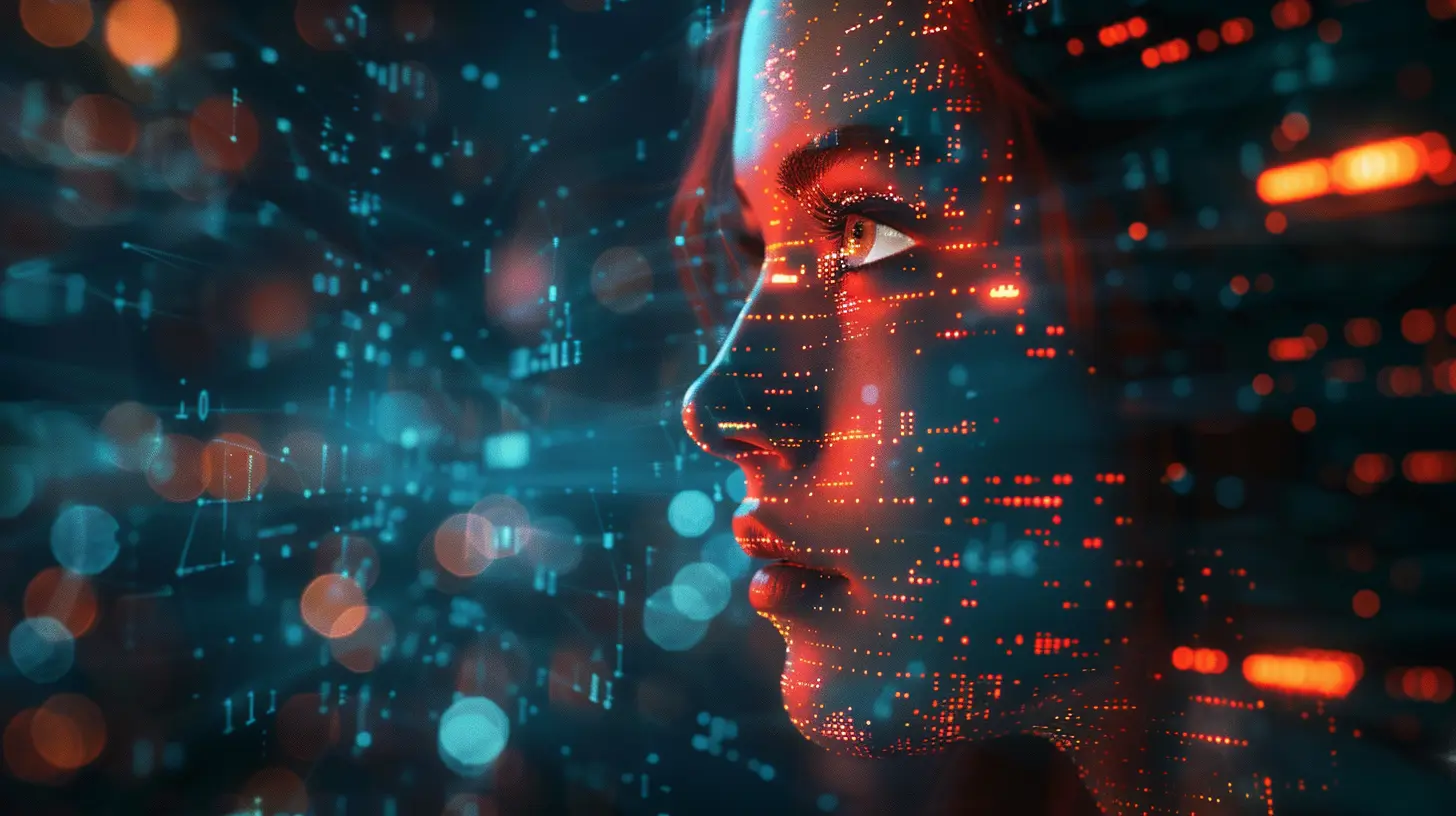
This is where it gets really interesting. Most people think of AI as cold and logical. But by 2026, AI will have a surprising new skill: emotional awareness. Using facial recognition, voice tone analysis, and even keyboard patterns, the system will detect your emotional state. Are you frustrated? Bored? Anxious? Excited?Imagine you are working on a tough problem. You start sighing, slouching, or typing erratically. The AI picks up on these cues. Instead of pushing you harder, it might say, "This is a tough one. How about we take a five-minute break and come back with fresh eyes?" Or it might switch to a different teaching method, like a story or a game, to re-engage you.
This is not about surveillance. It is about empathy. The AI is not judging you. It is trying to understand you so it can help you better. Think of it like a good friend who knows when you need a pep talk versus when you need to be left alone. By 2026, AI will be that friend, but one that is available 24/7 and never gets tired of your questions.
The End of Homework as We Know It
Let me ask you something. Do you remember homework? That pile of worksheets and problems that you had to finish after school, often without any help? It was a lonely, frustrating experience for many students. By 2026, homework will look radically different.Instead of a static assignment, homework will be an interactive session guided by AI. The AI will know exactly what you practiced in class. It will generate practice problems that target your weak spots, not just random ones from a textbook. If you get stuck, you do not have to wait until the next day to ask the teacher. The AI is right there, ready to walk you through the solution step by step.
And here is the best part. The AI will never assign busywork. It will only give you tasks that move you forward. If you already mastered a concept, it will not make you do twenty more problems just to fill time. It will let you move on. This means less frustration, less boredom, and more actual learning. Homework becomes a personalized coaching session, not a chore.
Teachers Become Mentors, Not Lecturers
Now, what about the teachers? Are they going to be replaced? Absolutely not. In fact, their role will become more important than ever. By 2026, AI will handle the repetitive, data-heavy tasks. Grading quizzes, tracking progress, generating reports, and managing administrative work will all be automated. This frees up teachers to do what they do best: inspire, motivate, and connect with students.Imagine a classroom where the teacher does not spend half the class lecturing. Instead, they walk around, helping individual students, facilitating group discussions, and diving deep into complex topics. The AI handles the basics. The teacher handles the humanity. This is a powerful combination. It turns the teacher from a dispenser of information into a mentor, a coach, and a guide.
For the first time, teachers will have real-time data on every student's progress. They will know exactly who is struggling and who is ready for a challenge. They can intervene early, before a student falls too far behind. This is not about replacing human connection. It is about empowering it.
Breaking Down Language and Accessibility Barriers
One of the most exciting possibilities is how AI will break down barriers. By 2026, language will no longer be an obstacle to learning. AI translation tools will be so seamless that a student in rural India can take a course from a top university in the United States, with real-time subtitles and voiceover in their native language. Not just translated, but adapted to their cultural context.Accessibility will also get a huge boost. Students with visual impairments will have AI that describes images and graphs in rich detail. Students with hearing impairments will get AI-generated sign language avatars. Students with dyslexia will get text that adjusts font, spacing, and color based on their needs. Learning will become truly inclusive, not as a afterthought but as a core feature.
This is not just about fairness. It is about unlocking human potential. There are millions of brilliant minds out there who are held back by a system that was not built for them. By 2026, AI will tear down those walls.
The Privacy Question
I have to be honest with you. All of this sounds amazing, but it also raises some serious questions. How do we protect student privacy when an AI is tracking every click, every emotion, every mistake? This is a valid concern, and it is one that educators and developers are grappling with right now.By 2026, I believe we will see strong regulations and ethical guidelines. Data will be anonymized and encrypted. Students and parents will have control over what is collected and how it is used. The AI will not be a Big Brother watching you. It will be a tool that you own, not the other way around.
The key is transparency. If a school uses AI, they need to explain exactly how it works and what data it collects. No hidden algorithms. No secret profiling. Just a clear, honest system designed to help, not to exploit. I am optimistic that we will get this right, because the benefits are too great to let it fail.
A Peek into 2026: A Day in the Life
Let me walk you through a fictional day in 2026. It is 8 AM, and Maria logs into her learning platform. The AI greets her with a cheerful message, "Good morning, Maria. You had a rough night of sleep, huh? Do you want to start with a light review or jump into the new material?" Maria chooses a review. The AI pulls up a quick quiz on last week's science lesson, focusing on the parts she struggled with.After the quiz, the AI notices she is ready for the next topic. It presents a short video, then an interactive simulation. Maria gets stuck on one concept. The AI detects her frustration and offers a different explanation, this time using a sports analogy because she loves basketball. It clicks. She moves on.
At school, her teacher, Mr. Chen, looks at his dashboard. He sees that Maria mastered the science topic but is struggling with a math concept. He pulls her aside for a five-minute one-on-one session. The rest of the class is working independently, each student on their own personalized path. No one is bored. No one is lost.
After school, Maria does her homework. It takes her 20 minutes because the AI only assigned problems that target her weak spots. She finishes, and the AI gives her a quick summary of what she learned. It also suggests a fun coding challenge for the weekend, because it knows she enjoys that. Maria logs off, feeling accomplished and curious for tomorrow.
The Human Element Will Never Go Away
Here is the truth. No matter how smart AI gets, it will never replace the human touch. A machine cannot give you a hug when you are discouraged. It cannot share a laugh over a silly mistake. It cannot inspire you with a story about their own struggles. That is where teachers, parents, and friends come in.AI is a tool. A powerful one, yes. But it is still just a tool. The real magic happens when we combine the best of technology with the best of humanity. By 2026, I believe we will have found that balance. We will have a system that is efficient, personalized, and data-driven, but also warm, supportive, and deeply human.
So, are we ready for this future? I think we are. The technology is almost here. The ideas are solid. What we need now is the will to change. We need to let go of old habits and embrace a new way of learning. It will not be perfect. There will be bumps along the road. But the destination is worth it.
Imagine a world where every student gets the education they deserve. Where no one is left behind because the system was not built for them. Where learning is a joy, not a chore. That is the world we are building, one AI-powered lesson at a time. And by 2026, it will be here.
all images in this post were generated using AI tools
Category:
Education And TechnologyAuthor:

Olivia Lewis
Discussion
rate this article
1 comments
Bellamy Diaz
AI in classrooms? Get ready for a learning adventure!
June 5, 2026 at 3:27 AM