How to Create a STEM-Rich Learning Environment at Home
13 December 2025
Let’s be honest—being a parent in today’s world is no easy feat. Between juggling work, managing screen time, and making sure your kid eats something green once in a while, the last thing you probably want to worry about is how to turn your house into a mini science lab or an engineering hub.
But here’s the thing: STEM (Science, Technology, Engineering, and Math) isn’t just about equations, wires, and test tubes. It’s about developing curiosity, problem-solving skills, and a can-do attitude—and you don’t need a fancy lab or a tech degree to make that happen. You just need a little guidance, some creativity, and a willingness to get messy.
So if you're asking, "How can I build a STEM-rich learning environment at home?" — you're in the right place. Let’s break it down step by step, in a way that fits into real-life parenting (yes, even if you’re reading this with one hand while your toddler smears peanut butter on the dog).
What Is a STEM-Rich Environment Anyway?
First things first, let’s get clear on what we mean by a “STEM-rich learning environment.” It doesn’t mean your living room has to look like a Google office or that your child needs to code JavaScript before they can tie their shoes.A STEM-rich environment is simply a space—physical and emotional—that promotes curiosity, exploration, experimentation, and real-world problem-solving. It supports hands-on learning, encourages questions (even the weird ones), and fosters creativity. Think of it as a place where failure isn’t the end—it’s just data for your next attempt.
Why Bother Creating One at Home?
Great question! After all, isn’t that what school is for?Well, yes and no.
Schools do a great job, but learning doesn’t stop at the classroom door. In fact, research shows that students who engage in STEM learning at home develop stronger critical thinking skills, show more interest in STEM careers, and generally do better in school.
Plus, when learning happens at home, it’s more personalized, flexible, and—best of all—fun. You can tailor it to your child’s interests (love dinosaurs? Great! Robots? Even better!) and go at your own pace—no test scores or report cards required.
Start with the Right Mindset
Before you rush out to buy building kits and microscopes, pause for a second. Creating a STEM-rich environment starts with the right mindset—not materials.Here are a few key things to remember:
- Curiosity over correctness – It’s not about getting the right answer, it’s about asking the right questions.
- Process over product – Focus on the thinking, experimenting, and discovering rather than the final outcome.
- Effort over expertise – You don’t need to be a scientist to inspire one.
So if your kid asks why the sky is blue and you have no idea? That’s awesome. Say, “Let’s find out together”—and you’re already winning.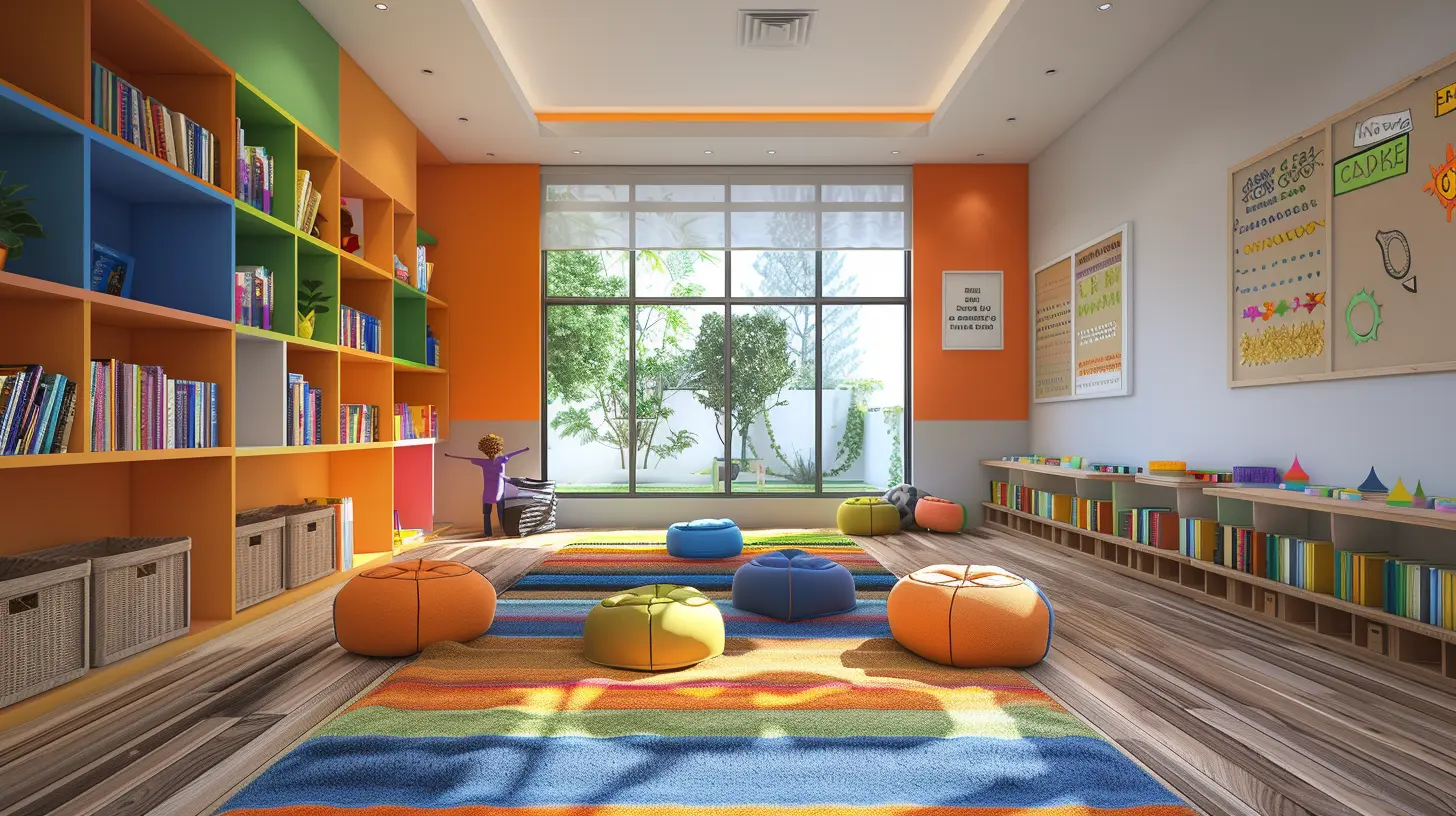
Carve Out a STEM Space at Home
Now you don’t need a full-blown STEM lab (unless you want one—kudos to you!). A simple designated space can go a long way. Here’s how to do it:1. Choose a Corner, Not a Castle
Pick a quiet, clutter-free area in your home—maybe the corner of the living room, a kitchen table, or even part of a garage. The goal is to have a consistent spot where exploration and projects can happen.2. Stock It with STEM Essentials
You’d be surprised at how many STEM tools you already have at home. Here’s a basic list to get started:- Measuring cups and spoons (for math and science experiments)
- Rulers, tape measures, and scales
- Paper, markers, pencils
- Old electronics to tinker with
- Building materials (LEGOs, blocks, cardboard, string, glue)
- A simple magnifying glass or microscope
- Access to a computer or tablet (for research and coding games)
Don’t break the bank—Dollar Stores and recycling bins are full of hidden STEM treasures.
Create a Culture of Curiosity
One of the most impactful things you can do? Encourage questions—all of them."Why does soda fizz?"
"Can the moon fall?"
"How do planes fly?"
Instead of brushing them off or offering a quick answer, turn the moment into a mini-adventure. Ask, “What do you think?” or “How could we test that?” and dive deeper together.
You’re not just answering questions—you’re raising a thinker.
Make STEM Part of Everyday Life
STEM isn't a subject—it’s a lens. You don’t need formal lesson plans to weave it into your day. Here are some easy wins:In the Kitchen
- Math: Measure ingredients, double or halve recipes.- Science: Explore chemical reactions by baking soda and vinegar experiments.
- Engineering: Design a spaghetti bridge while waiting for the pasta water to boil.
In the Backyard
- Nature Walks: Identify plants or insects, measure tree height, or start a mini-garden.- Physics Fun: Build ramps, throw balls, or fly paper planes to explore motion and gravity.
During Screen Time
Yes, screen time can be productive! Check out these STEM-friendly platforms:- Scratch: Intro to coding for kids
- Tynker: Coding and game development
- Mystery Science: Engaging science video lessons
- NASA Kids' Club: Space-themed learning
Make tech time count, not just mindless scrolling.
Encourage Tinkering and Failing Forward
One of the best gifts you can give your child is the freedom to fail—and try again.Set up tinkering time: Let them take apart a broken remote, build a marble run, or try to make a paperclip float. If it doesn’t work? Awesome. Now ask them, “What would you try next time?”
Failure isn’t the opposite of success in STEM—it’s the stepping stone to it.
Bring in the Right Books
Books are magic—they can spark ideas, fuel curiosity, and introduce big concepts in small doses. Keep a shelf of STEM-themed books that are fun, colorful, and age-appropriate.Some awesome titles include:
- Rosie Revere, Engineer by Andrea Beaty
- Ada Twist, Scientist by Andrea Beaty
- What If You Had Animal Teeth? by Sandra Markle
- National Geographic Little Kids First Big Book series
Reading together is still one of the best (and coziest) ways to build a STEM-loving mindset.
Connect Learning to Real Life
Kids often wonder, “When will I ever use this?” Show them!- Talk about how engineers design roller coasters or how doctors use math daily.
- Explain how 🧬 DNA affects how we look, or how weather patterns are predicted.
- Let them try out “real life” STEM jobs—be a weather forecaster, a botanist, a game developer for a day.
Connecting abstract ideas to actual jobs and people makes everything more meaningful.
Involve the Whole Family
STEM at home isn’t just for kids—it’s way more fun when it’s a family affair.Host a family STEM night. Build catapults with spoons and marshmallows. Have a robot dance-off. Make slime, build boats, or race paper airplanes.
Trust me, the giggles will be just as important as the learning.
Keep it Consistent, Not Complicated
You don’t need to do a complex science experiment every day. Just sprinkle a bit of STEM into your week.Set a weekly “STEM Sunday” or “Tinker Tuesday.” Commit to 30 minutes of exploring, building, or questioning. Put it on the calendar like any other appointment.
Consistency is what builds habits—and habits are what shape young minds.
Look for Community Resources
You’re not alone in this. Libraries, museums, parks, and community centers often have awesome STEM resources and events—many of them free!Also, websites like Khan Academy, Code.org, and PBS Kids offer free games, videos, and activities tailored for different ages. Use them to keep things fresh and exciting.
Celebrate the Small Wins
Not every STEM moment will result in a working robot or perfectly-measured vinegar volcano—and that’s okay.Celebrate the effort:
- “I love how you kept trying even when it didn’t work.”
- “Look how many ideas you came up with!”
- “You were so focused—that’s what scientists do!”
Positive reinforcement helps build confidence, and confidence fuels curiosity.
Final Thoughts
Creating a STEM-rich learning environment at home isn’t about perfection—it’s about presence, possibility, and play. When you show your kids that learning is a lifelong adventure, filled with questions, failures, and “aha!” moments, you’re doing more than just teaching STEM—you’re raising explorers.So whether you’re building a volcano out of baking soda or simply answering “why” for the hundredth time today—know this: you’re making a difference. One curious question at a time.
And who knows? That cardboard rocket ship in your living room might just be the launchpad for the next great scientist, coder, or engineer.
all images in this post were generated using AI tools
Category:
Stem EducationAuthor:

Olivia Lewis
Discussion
rate this article
2 comments
Maddox Potter
Who knew that turning your living room into a mini-laboratory could involve more than just spilled coffee and a few mismatched Lego pieces? Get ready to embrace your inner mad scientist while dodging the occasional flying sock! Let the STEM-tastic fun (and chaos) begin!
December 25, 2025 at 1:40 PM
Olivia Lewis
Absolutely! Embracing the chaos can spark creativity and curiosity—just remember, every great experiment comes with a little mess. Let the STEM adventures begin!
Faye Foster
This article offers valuable insights on fostering a STEM-rich environment at home. By incorporating hands-on activities and accessible resources, families can inspire curiosity and creativity, laying a strong foundation for future learning and problem-solving skills. Great read!
December 15, 2025 at 12:52 PM
Olivia Lewis
Thank you! I'm glad you found the article helpful in fostering a STEM-rich environment at home. Your feedback is much appreciated!