Is Hybrid Learning the New Normal for 2026 and Beyond?
13 May 2026
Remember the scramble of 2020? We all got thrown into the deep end of remote learning, and honestly, it felt like we were all just treading water. But here we are, a few years later, and that chaotic experiment has quietly evolved. It's not about being stuck at home anymore. It's about choice. It's about flexibility. The big question sitting on everyone's desk--from school principals to college deans to parents--is simple: Is hybrid learning just a temporary band-aid, or is it the actual foundation for education in 2026 and beyond?
Let's be real. We're not going back to the old model 100% of the time. The genie is out of the bottle. Students have tasted the freedom of learning in their pajamas (or at a coffee shop), and teachers have discovered that not every lesson needs to be a live, in-person lecture to be effective. But does that mean we're all in for a fully hybrid future? Let's dig into the messy, exciting, and sometimes frustrating reality.

The Great Unlearning: Why "Normal" Is a Moving Target
First, let's get one thing straight. The "normal" we used to know-the one with rigid schedules, physical attendance, and a one-size-fits-all approach-was already cracking before the pandemic hit. We just didn't notice. Hybrid learning isn't a brand-new invention; it's the logical next step in a world that demands personalization.Think of it like this: education used to be a factory model. You show up, sit on the assembly line, and get the same parts installed at the same time. Hybrid learning is more like a tailor. You get the base suit (the curriculum), but you can adjust the sleeves (your schedule) and choose the fabric (the learning mode) that fits your life.
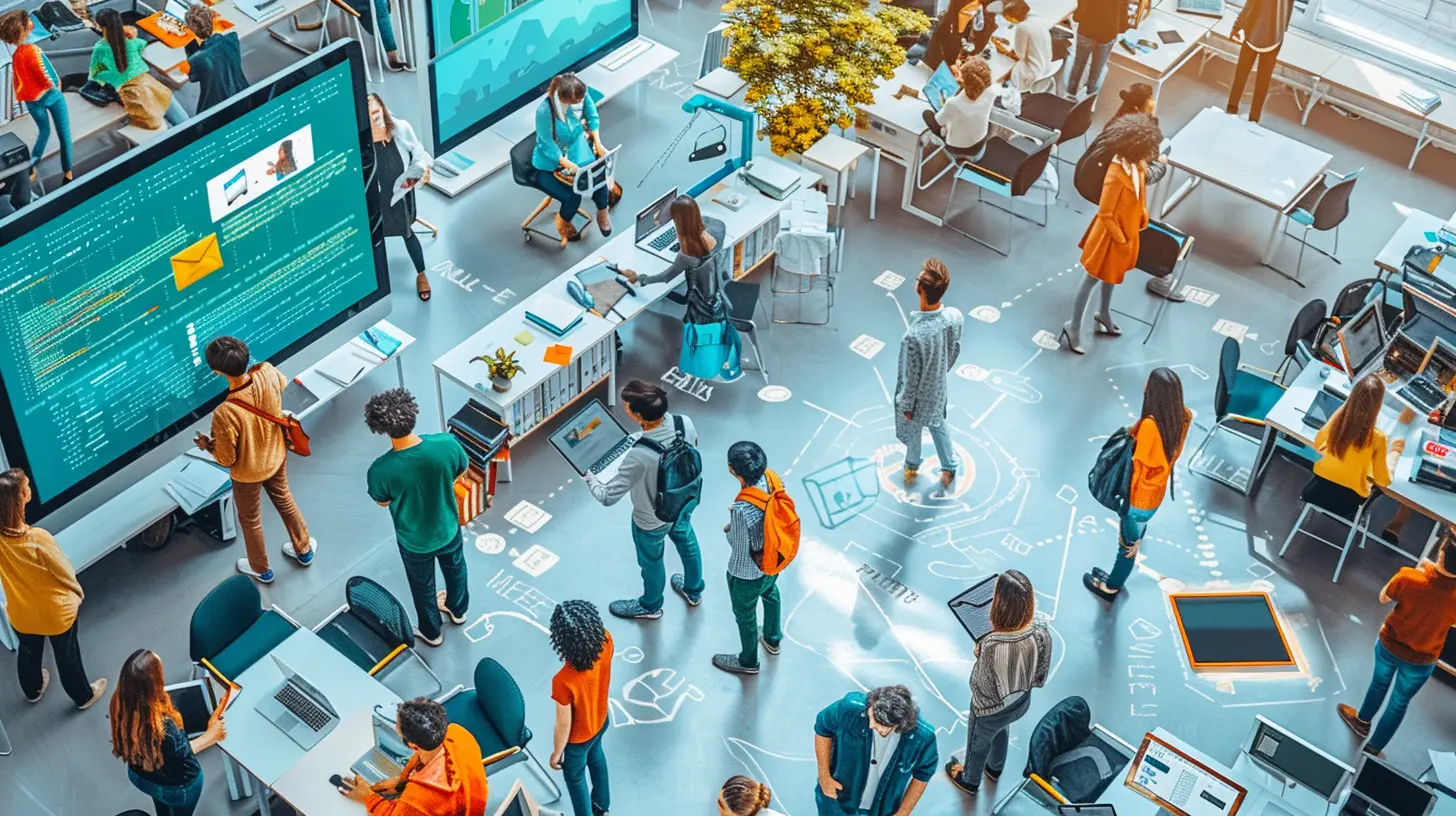
For 2026, the "new normal" isn't a single mode. It's a spectrum. On one end, you have fully in-person, hands-on labs and group discussions. On the other, you have asynchronous, self-paced modules. The magic-and the challenge-happens in the middle. The future isn't about choosing one or the other. It's about fluidly moving between them based on the subject, the student, and the moment.
Why Hybrid Sticks: The Practical Wins for 2026
Let's talk about the elephant in the room: convenience. But not the lazy kind of convenience. The smart kind. For the student in 2026, time is the most precious resource. They're juggling part-time jobs, internships, family responsibilities, and maybe even side hustles. A strict 8 AM to 3 PM schedule feels like a relic.The Flexibility Factor
Hybrid learning hands the steering wheel back to the learner. Have a doctor's appointment on Tuesday morning? No problem. You can catch the recorded lecture later. Need to review a complex math concept? Watch it again at 2x speed. This isn't just about comfort; it's about mastery. When you control the pace, you actually learn better. You stop pretending to understand and start digging deeper.
The Cost Reality
Tuition is skyrocketing. Commuting is expensive. Housing costs are insane. Hybrid models can slash these costs. Imagine a college in 2026 where you only need to be on campus two days a week. That's two days of gas money saved, two days of parking fees avoided, and potentially a cheaper living situation further from campus. For community colleges and trade schools, this is a game-changer for accessibility. You can't learn to weld entirely online, but the theory? Absolutely. That saves cash and time.
The Teacher's New Toolbox
Here's a secret most articles miss: teachers actually like hybrid when it's done right. It's not about replacing them with a screen. It's about giving them superpowers. A good hybrid setup lets a teacher record a killer mini-lecture once and then spend class time on real, messy problem-solving. They can use online forums for quiet students who never raise their hand. They can offer office hours on Zoom for students who are too shy to walk into a physical room. For the educator, hybrid is a way to scale their impact without burning out.
The Cracks in the Foundation: What Still Sucks About Hybrid
Alright, let's not sugarcoat it. Hybrid learning has some serious warts. If we pretend it's all sunshine, we'll build a house of cards that collapses by 2027.The Engagement Gap (It's Real)
You know that feeling when you're in a Zoom meeting and everyone has their camera off? It's like talking to a wall of black mirrors. Hybrid classrooms suffer from this split attention. Half the students are in the room, half are floating in the digital ether. The in-person students feel like they're performing for a camera, and the remote students feel like they're watching a TV show. Bridging that gap requires serious tech and even more serious teaching skill. Most schools aren't there yet.
The Equity Problem We Can't Ignore
This is the big one. Hybrid learning is only as good as your internet connection and your home environment. For 2026, we're still looking at a digital divide. A student living in a rural area with spotty Wi-Fi or a crowded apartment with no quiet space isn't getting the same experience as a student with a dedicated desk and fiber optics. If we push hybrid as the "new normal" without solving this, we're just making inequality worse. It's like handing out running shoes to everyone but only giving some people the map.
The Social Weirdness
School isn't just about learning facts. It's about learning how to be a human. It's the awkward group projects, the spontaneous hallway conversations, the lunch table debates. Hybrid models can kill those organic moments. You can't replicate the serendipity of bumping into a classmate after a tough exam. For younger students, especially in K-12, the social-emotional cost of too much screen time is real. We're seeing it in rising anxiety and decreased social skills. By 2026, we need to be honest: some things are just better in person.

What 2026 Actually Looks Like: Three Scenarios
Let's get specific. Hybrid isn't one thing. Here are three ways it will likely play out.Scenario 1: The "Flipped" Classroom
This is the most mature model. Lectures are pre-recorded and watched at home. Class time is for doing. In 2026, expect this to be the default for most college courses and advanced high school classes. The teacher becomes a coach, not a lecturer. The homework becomes the lesson, and the lesson becomes the homework. It's counterintuitive, but it works because it puts active learning where it belongs: with the teacher present.
Scenario 2: The "Drop-In" Model
Think of this like a gym membership. You have a core schedule, but you can "drop in" for specific events. A university might have mandatory in-person labs for science classes, but optional in-person sessions for humanities. The rest is online. This model works great for commuter schools and adult learners. You get the community when you want it, the flexibility when you need it.
Scenario 3: The "Pod" System
This is the future of K-12, especially for middle school. Students are grouped into small, stable "pods" of 10-15. They meet in person for core subjects like math and reading, then rotate to online modules for electives, enrichment, or independent study. The pod provides the social glue and accountability, while the online parts offer personalization. This reduces the chaos of rotating hundreds of kids through a building and keeps the human connection strong.
The Tech That Will Make or Break It
You can't talk about 2026 without talking about the tools. Right now, hybrid learning is often just a bad Zoom call. That has to change.AI as the Tutor, Not the Teacher
By 2026, AI will be the invisible assistant. Imagine a system that watches a student struggle with a math problem and automatically suggests a different video or a practice set. That's not science fiction; it's already happening. The key is using AI to handle the repetitive stuff-grading basic quizzes, answering FAQs, providing instant feedback-so the human teacher can focus on the hard stuff: motivation, mentorship, and critical thinking.
The Death of the Bad Webcam
We're tired of grainy video and muffled audio. Expect schools to invest in proper "hybrid classrooms." That means multiple cameras that track the teacher, ceiling microphones that pick up student questions, and screens that actually show remote students' faces at eye level. The goal is to make the remote student feel like they are in the room, not watching a surveillance feed.
Asynchronous Collaboration Tools
Forget the old discussion board where you post a reply and wait three days. By 2026, tools like virtual whiteboards, collaborative documents that update in real-time, and short-form video responses (think TikTok for homework) will be standard. The learning doesn't stop when the class ends. It keeps flowing in a shared digital space.
The Human Element: Why Hybrid Won't Replace Real Connection
Here's the thing that keeps me up at night: we are social animals. A screen can deliver information, but it struggles to deliver inspiration. The best teachers I ever had didn't just teach me facts; they taught me how to think, how to be curious, how to be resilient. That happens in the space between two people.Hybrid learning, at its best, frees up time for that human connection. It takes the boring parts (lectures, drills) and automates them. It gives back the precious in-person time for what really matters: debate, collaboration, empathy, and trust.
But it also requires a new kind of discipline. Students in 2026 will need to be more self-directed. They can't just show up and absorb. They have to engage, ask questions, and manage their own time. That's a skill we need to teach explicitly. We can't just throw a 14-year-old into a hybrid system and expect them to figure it out. We need to coach them on how to be a "hybrid learner."
The Verdict for 2026 and Beyond
So, is hybrid learning the new normal? Yes, but not in the way you might think. It's not a permanent state. It's a dynamic tool. The "new normal" is actually "no normal." The schools and universities that succeed in 2026 will be the ones that treat hybrid as a flexible option, not a rigid requirement.They will offer multiple pathways. They will invest in teachers, not just tech. They will prioritize equity and fight the digital divide. And they will never forget that learning is, at its core, a human act.
It's a bit like cooking a good meal. You can have all the best ingredients (tech, curriculum, flexibility), but if you don't have a good cook (the teacher) and a good table (the community), the meal falls flat. Hybrid learning is the recipe. The people are the ones who make it delicious.
For students graduating in 2026, the world will be more fluid, more connected, and more demanding than ever. A hybrid education, done right, prepares them for that world. It teaches them to be adaptable, to manage their time, to communicate across channels, and to value both solitude and collaboration. Those are skills that no amount of rote memorization can teach.
The question isn't whether hybrid will stick. It's already here. The real question is: will we do it well enough to actually help people? I think we can. But it's going to take a lot of honest work, a lot of listening to students, and a willingness to ditch the old playbook for good.
So, are you ready for 2026? Because the classroom of the future doesn't have four walls. It has a door that swings both ways.
all images in this post were generated using AI tools
Category:
Education And TechnologyAuthor:

Olivia Lewis
Discussion
rate this article
1 comments
Grayson Perez
Hybrid learning offers flexibility and accessibility, making education more adaptable to diverse needs. However, it also presents challenges in engagement and technology access that must be addressed for its success.
May 26, 2026 at 4:25 AM
Olivia Lewis
You make a great point. Balancing flexibility with the need for engagement is crucial in the evolving landscape of hybrid learning. We must address those challenges to truly enhance education for everyone.