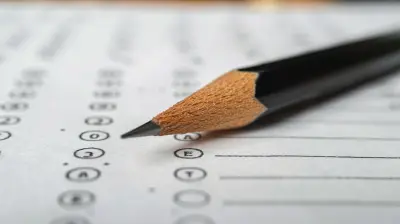
The Role of Practice Tests in Achieving High Scores
20 January 2026
Let’s be honest—tests can be nerve-wracking. Whether you're preparing for the SAT, ACT, GRE, MCAT, or any other critical exam, the pressure to perform well is real. So, what’s the secret sauce to not just surviving but absolutely crushing your exam? One word: practice.
Taking practice tests isn’t just a box to check off during your prep—it’s a game-changer. In fact, they might just be your most powerful weapon when it comes to scoring high. But how exactly do they help? And how can you make the most of them?
Grab a coffee (or tea), settle in, and let’s unpack why practice tests should be your new best friend in any exam prep journey.
Why Practice Tests Are a Big Deal
They Show You Where You Really Stand
You might think you’ve nailed all the concepts because you've read all the chapters. But reading and applying are two totally different beasts. A practice test reveals the truth. It’s like holding up a mirror to your actual performance level.Think of it like training for a marathon. Running around the block might feel productive, but until you run a full 10k, you won’t truly know what you're capable of—or where you'll start to tire. Practice tests simulate the real race.
They Build Exam Stamina
Most major exams aren’t short. We’re talking two, three, sometimes even four hours of brain-burning concentration. That’s not something you can ease into on test day. Practice tests train your brain like a muscle. The more you work it under test-like conditions, the better your endurance.Ever felt mentally exhausted halfway through a mock test? Good. That means it’s working.
The Psychology Behind Practice Testing
There’s actual science backing the power of practice tests. It’s called the Testing Effect—a psychological phenomenon where the act of retrieving information (aka testing yourself) strengthens memory and learning more effectively than simply re-reading materials.So while it feels productive to flip through your notes or highlight stuff in your book, what really boosts retention is digging up that info from your brain during a test. It’s a mental workout, and your memory loves it.
Practice Tests Reduce Test-Day Anxiety
Familiarity Breeds Confidence
One of the biggest anxiety triggers during exams is uncertainty. What will the format be like? Will time run out? What kind of questions will I see?By regularly taking practice tests, you strip away that uncertainty. You become familiar with:
- The layout of the test
- The type of questions asked
- The pace you need to maintain
- How to budget your time for each section
When test day rolls around, it feels more like déjà vu than a terrifying new experience. And that comfort can seriously boost your confidence.
How Practice Tests Improve Time Management
Time is Always Ticking
No matter how smart you are, none of it matters if you run out of time halfway through. Practice tests are a reality check. They teach you how long to spend on each question and where to move on when you’re stuck.Over time, you'll develop a strong inner clock. You’ll know when to speed up, when to slow down, and how to avoid those panic spirals when the countdown begins.
Strategies to Maximize Practice Test Benefits
Okay, so practice tests are great. But how you use them—that's the real key. Here are some pro tips to make the most out of each mock exam.1. Simulate Real Test Conditions
Treat it like the real thing: no phone, no snacks, no breaks (unless the real exam allows one). Take it at the same time of day as the actual test, if possible.The closer the environment, the better prepared your brain will be when facing the real deal.
2. Review, Don’t Just Test
Taking a test and moving on is like cooking a meal and not tasting it. The real progress happens in the review.Dig into your mistakes:
- Why did you get that question wrong?
- Did you misread it?
- Was it a content gap?
- Did you second-guess yourself?
This reflection turns each error into a mini-lesson. Gold.
3. Focus on Weak Areas
It’s tempting to keep practicing what you’re good at (because it feels nice), but growth hides in your weak spots. If you're always bombing geometry or vocabulary, zero in.A good practice test reveals patterns. Are you consistently missing questions in a specific section? That’s where your efforts should go.
4. Mix It Up
Avoid taking the same version of a test over and over. You’ll start memorizing answers rather than learning concepts.Use different practice test versions or question banks to keep your brain flexible and adaptive.
Practice Makes Permanent—Not Just Perfect
You’ve heard the saying “practice makes perfect,” right? Well, let’s tweak that a bit: practice makes permanent. Meaning, if you practice with poor habits, you’ll cement those bad strategies into your routine.That’s why it’s crucial to treat practice tests with intention and effort every single time.
Think of it like muscle memory. A pianist doesn’t just play random keys—they practice scales and pieces with focus so that when they perform, everything flows naturally. You want your testing skills to become second nature, too.
Tracking Progress Over Time
Don’t just take practice tests blindly. Keep track.Use a spreadsheet, journal, or app to note:
- Your scores
- Time taken
- Areas of strength
- Areas needing improvement
Seeing your progress over time is incredibly motivating. It’s proof that your efforts are paying off—and it helps you fine-tune your strategy as you go.
Practice Tests as a Confidence Booster
Confidence is half the battle. Walking into an exam room feeling sure of your abilities can make all the difference in how you perform.When you’ve taken multiple full-length practice exams, seen a wide range of questions, and improved over time, you no longer view the real test as a monster. You see it as just another Tuesday.
Common Mistakes to Avoid
Let’s quickly touch on what not to do with practice tests:- Don’t cram them all in last minute. Spread them out!
- Don’t use them just for checking scores. Use them for learning and feedback.
- Don’t skip the review. That's where the magic happens.
- Don’t compare yourself to others. Focus on your progress only.
Real-Life Success Stories
Want proof? Let’s talk real-life.Tons of high-scoring students credit frequent practice tests for their success. They weren’t necessarily the smartest or the most naturally gifted—they were the most prepared.
They treated each mock test like the real thing. They reflected, analyzed, and adjusted their prep based on the results. When test day came? It was just another practice run.
Practice Tests Are Not Optional—They’re Essential
If you’re serious about achieving a top score, practice tests shouldn’t be an afterthought or a once-in-a-while thing. They should be baked into every stage of your study plan.They test your knowledge.
They build your endurance.
They sharpen your time management.
They boost your confidence.
More than anything, they help you walk into the exam room already knowing what to expect—and that’s a priceless advantage.
Final Thoughts
Look, nobody ever said test prep was easy. But with the right tools, it becomes a lot more manageable—and way more effective. Think of practice tests as your personal GPS: no matter where you start, they help guide you toward your destination with the least amount of detours.So don’t wait until the final week to start taking them. Start now. Track your progress. Learn from your missteps. And remember—every single practice test brings you one step closer to that high score.
You’ve got this.
all images in this post were generated using AI tools
Category:
Test PreparationAuthor:

Olivia Lewis
Discussion
rate this article
2 comments
Jude Brown
Practice tests are like a sneak peek into exam day—minus the sweat and panic! They're your academic GPS, guiding you with 'turn left at Incorrect Answer' and 'recalculating' when you realize you studied the wrong chapter. Happy studying, fellow test navigators!
February 10, 2026 at 3:30 AM
Olivia Lewis
Absolutely! Practice tests are invaluable tools that help map out your study journey and pinpoint areas for improvement. Happy studying!
Celine McGivern
Oh sure, because nothing screams "destined for greatness" like taking joyless quizzes in a desperate race for a good score!
January 20, 2026 at 4:51 AM
Olivia Lewis
While practice tests may seem tedious, they are proven tools that help reinforce knowledge and improve exam performance, ultimately setting the stage for success.