The Role of the Metaverse in Future Classrooms by 2027
22 May 2026
Let's be honest for a second. When you hear the word "metaverse," what comes to mind? Probably a bunch of people in VR headsets waving their hands around in a cartoon world, or maybe that awkward Facebook rebrand that still feels a bit forced. I get it. For a long time, the metaverse felt like a solution in search of a problem-a shiny tech demo that didn't really fit into our daily lives, especially not in a classroom.
But here's the thing: by 2027, that's going to change. Not because the technology will suddenly become perfect, but because the way we think about learning is already shifting under our feet. We've all seen how a kid who can't sit still for a ten-minute lecture will happily spend three hours building a fortress in Minecraft. That's the clue. The metaverse isn't about escaping reality; it's about giving students a reality that actually works for them.
So let's ditch the hype and talk brass tacks. What role will the metaverse actually play in classrooms just a few years from now? Not the sci-fi version, but the gritty, practical, sometimes messy reality of a teacher trying to get a room full of teenagers to care about the Peloponnesian War. By 2027, I think we'll see three big shifts: the death of the static textbook, the rise of the "field trip" that never leaves the school, and a weird but wonderful return to hands-on learning through digital hands.

The Static Textbook Finally Retires (And Good Riddance)
Think about the last time you opened a textbook. Be honest. Did you actually read it, or did you just skim for the bold words and the pictures? Textbooks are like those old flip phones in a drawer-they still work, but they feel like relics. They're flat, they're silent, and they assume every student learns at the same pace. That's not how real learning works.By 2027, the metaverse will let us bury the textbook for good. Instead of reading a paragraph about the human heart, a student will step inside a beating heart. I'm not talking about a cheesy 3D model on a screen. I mean they'll walk through the chambers, watch the valves open and close in real time, and see how blood actually moves. It's one thing to memorize that the left ventricle pumps blood to the body. It's another thing entirely to stand in that ventricle and feel the pulse around you.
This isn't about replacing teachers with avatars. It's about giving teachers a better tool. Imagine a history teacher who can pull up a virtual version of ancient Rome, not as a static image, but as a living city where students can walk the streets and hear the market noise. That teacher doesn't have to be a tech wizard. They just need to say, "Okay, everyone, put on your headsets. Today we're going to the Forum." And suddenly, the lesson isn't about memorizing dates-it's about experiencing a place.
The best part? This kind of learning is sticky. You forget a date you read on a page, but you don't forget the smell of a virtual bakery or the sound of a chariot rumbling past. By 2027, schools that still rely on dusty textbooks will look as outdated as a classroom with a chalkboard and no electricity. The metaverse won't just be an add-on; it will be the default way to teach anything that involves space, time, or scale.

The Field Trip That Happens Every Tuesday (Without the Permission Slips)
Field trips are a pain, right? I love them in theory, but in practice, they're a logistical nightmare. You need buses, chaperones, permission slips, a dozen reminders, and a prayer that nobody loses a kid at the museum. By the time you actually get there, half the students are tired, hungry, or more interested in the vending machine than the exhibits.The metaverse flips that whole mess on its head. By 2027, a field trip will be something you do on a Tuesday morning between math and lunch. No bus. No permission slip. No lost kids. You just put on a headset, and suddenly you're standing on the surface of Mars, looking at the Valles Marineris canyon. Or you're inside a working nuclear reactor, watching the control rods move. Or you're in the middle of a rainforest, counting species you've never even heard of.
This isn't about replacing real-world experiences. A virtual trip to the Grand Canyon is not the same as standing on the edge and feeling the wind. But here's the kicker: most students will never get the chance to visit the Grand Canyon. Or the Great Wall. Or the inside of a volcano. The metaverse democratizes access. A kid in a rural school in Nebraska can have the same immersive experience as a kid in a fancy private school in Tokyo. That's not just cool-that's fair.
And it's not just about geography. Think about time. We can't actually go back to 1776, but we can build a virtual Philadelphia where students can walk the streets, hear the debates, and even talk to a digital Benjamin Franklin (who, let's be honest, would probably be a bit of a handful). By 2027, history teachers will treat the metaverse like we treat video now-a core part of the lesson, not a bonus. The question won't be "should we do a virtual field trip?" It will be "which virtual field trip fits this unit best?"
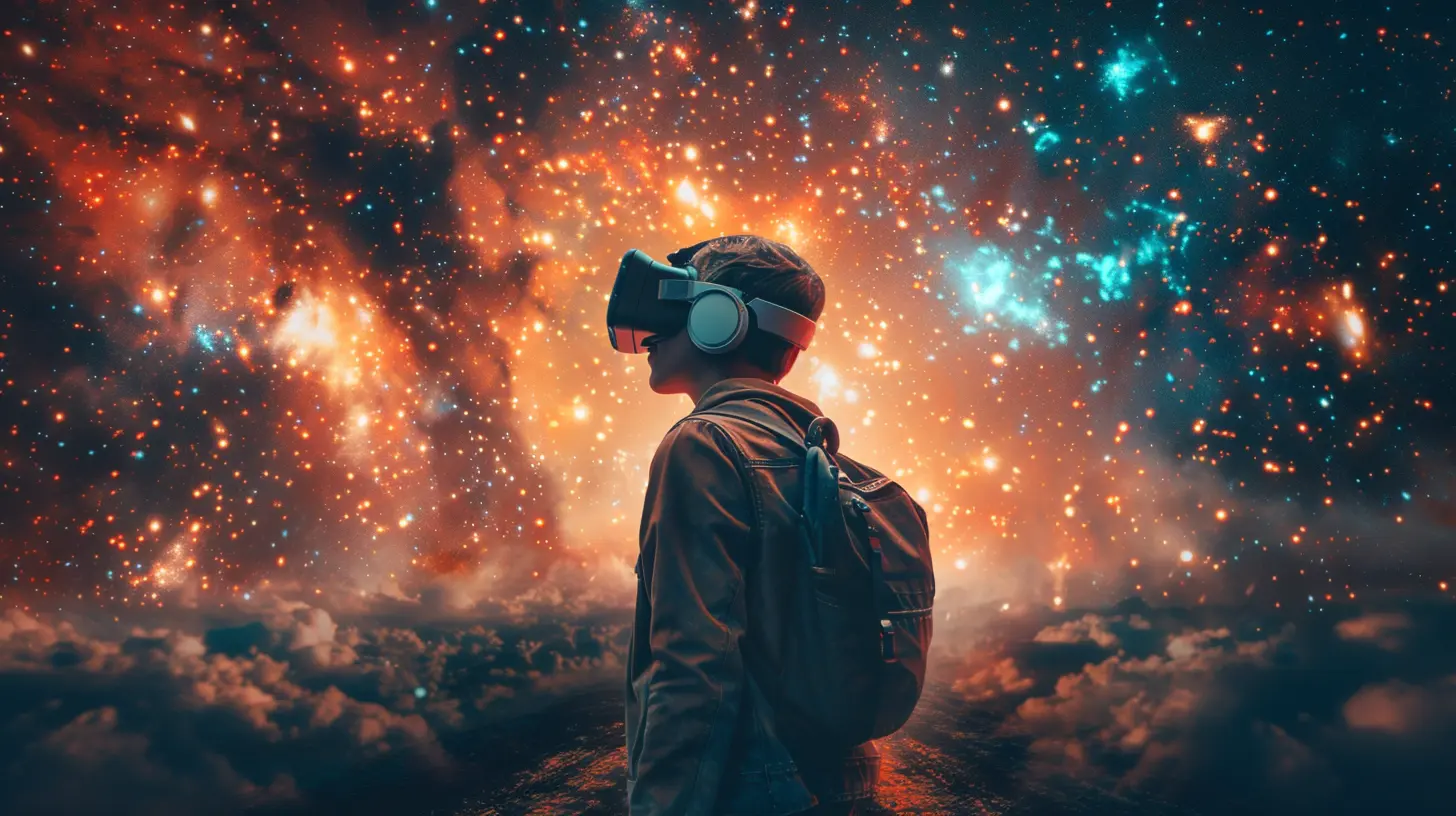
Hands-On Learning Without the Mess (or the Cost)
Here's a dirty secret about hands-on learning: it's expensive. Science labs need equipment. Art classes need supplies. Shop class needs tools and materials. And all of that stuff breaks, runs out, or gets used up. By 2027, the metaverse will let students get their hands dirty without actually getting dirty.I'm not saying we should get rid of real labs. There's no substitute for the feeling of a real beaker in your hand or the smell of a chemical reaction. But let's be real: most schools can't afford to let every student do a dissection or build a circuit board. The metaverse solves that by giving every student their own virtual lab. They can mix chemicals that would blow up a real classroom. They can dissect a virtual frog as many times as they want. They can build a bridge and watch it collapse, then rebuild it better.
This is where the "hands-on" part gets interesting. With haptic gloves or simple controllers, students can actually feel the weight of a virtual tool or the resistance of a virtual material. By 2027, the tech won't be perfect-it never is-but it will be good enough to teach muscle memory. A student learning to weld in a virtual shop won't get burned, but they'll learn the correct angle and speed. A student learning to suture in a virtual clinic won't hurt anyone, but they'll develop the fine motor skills.
And here's the real game-changer: failure becomes free. In a real lab, breaking something is a problem. In the metaverse, breaking everything is part of the lesson. You can try a hundred different approaches, fail at all of them, and learn something from each failure. That's how real learning happens-through trial and error, not through a single perfect attempt.

The Social Side: Learning Together (Even When Apart)
We all remember that kid in class who never raised their hand. The one who knew the answer but was too scared to speak up. In a physical classroom, that kid can hide in the back row. In the metaverse, they can hide too-but they don't have to. By 2027, virtual classrooms will offer something that physical ones often can't: a low-stakes way to participate.Think about it. In a VR classroom, you can raise your hand without everyone staring at you. You can work in a small group without the teacher hovering. You can even ask a question privately, without the whole class hearing. For introverted students, for anxious students, for students who process things more slowly, the metaverse can be a lifeline. It's not about replacing face-to-face interaction-it's about adding another layer where everyone can find their comfort zone.
Group projects will also get a facelift. Right now, a group project usually means one kid does all the work while the others nod along. In the metaverse, you can actually see what everyone is doing. You can build a model together, edit a document in real time, or even practice a presentation in front of a virtual audience. The teacher can drop into any group, listen in, and give feedback without interrupting. It's like having a classroom where the teacher can be everywhere at once.
But let's not pretend it's all sunshine. There are real concerns here. Screen time, for one. Nobody wants kids living in headsets for eight hours a day. The metaverse of 2027 won't be an all-day thing. It will be a tool you use for specific lessons, like a whiteboard or a projector. And there's the issue of equity. Not every school can afford VR headsets. But here's the hopeful part: the cost of this tech is dropping fast. By 2027, a decent headset might cost less than a graphing calculator. And just like we found ways to get laptops into classrooms, we'll find ways to get these tools in too.
The Teacher's Role: From Sage to Guide (and That's Okay)
If you're a teacher reading this, you might be worried. "Does this mean I'm going to be replaced by a robot?" No. Not even close. The metaverse doesn't replace teachers-it changes what they do. Instead of standing in front of a board and lecturing, a teacher becomes a guide, a facilitator, a curator of experiences.By 2027, a good teacher will spend less time explaining and more time orchestrating. They'll say, "Okay, we're going to explore the inside of a cell. I want you to find the mitochondria and tell me what it does. Go." And then they'll watch as students wander through the virtual cell, poking at organelles, asking each other questions. The teacher's job is to answer the deep questions, to connect the dots, to help students make sense of what they're seeing.
This is actually harder than lecturing. It requires more creativity, more flexibility, more empathy. But it's also more rewarding. Instead of fighting to keep students awake, you're struggling to get them to take off the headset at the end of class. That's a good problem to have.
The Elephant in the Room: Distraction and Overload
Let's not sugarcoat it. The metaverse has a dark side, and by 2027, we'll still be wrestling with it. Distraction is the obvious one. If you put a kid in a virtual world, how do you keep them on task? What stops them from wandering off to play a game or chat with a friend? The answer is good design. A well-built virtual classroom doesn't feel like a game. It feels like a space where learning happens. The teacher can see where everyone is, pull them back if they drift, and even lock certain features during a lesson.There's also the problem of sensory overload. Some students will find VR overwhelming. The bright colors, the constant motion, the pressure of being "in" a space that isn't real. By 2027, we'll have better settings-dimmer lighting, slower movement, options for audio-only participation. The metaverse won't be one-size-fits-all. It will have to be flexible enough to let a student step back, take a break, or just watch from the sidelines.
And we can't ignore the equity gap. Not every school will have the budget for high-end headsets. Some will use cheap cardboard viewers with phones. Some will use desktop VR without a headset at all. The metaverse of 2027 won't be a single platform-it will be a spectrum of experiences. The goal isn't to have the fanciest tech. It's to have the most accessible tech that still delivers a genuine learning experience.
A Realistic Look at 2027
So what does the classroom of 2027 actually look like? It's not a pod full of kids in headsets all day. It's a regular classroom with desks and chairs and a whiteboard. But on one wall, there's a cart with headsets, charged and ready. The teacher pulls them out for a specific lesson-maybe a virtual tour of a coral reef, maybe a collaborative engineering challenge. The students put them on for twenty minutes, then take them off and talk about what they saw.The metaverse won't be the star of the show. It will be a supporting actor. The real star is still the teacher, the student, and the messy, beautiful process of learning together. By 2027, we'll stop talking about the metaverse as this futuristic thing. We'll just call it "the classroom."
And honestly? That's exactly how it should be.
all images in this post were generated using AI tools
Category:
Education TrendsAuthor:

Olivia Lewis
Discussion
rate this article
1 comments
Thornewood McCullough
The metaverse will revolutionize education by enhancing engagement and collaboration, preparing students for a digital future.
May 29, 2026 at 11:54 AM
Olivia Lewis
I appreciate your insight. The metaverse has great potential to transform how students learn and connect, making education more dynamic and interactive.