The Role of the Teacher in Inquiry-Based Learning Environments"
4 August 2026
When you hear the phrase “inquiry-based learning,” what comes to mind? Is it students running wild with curiosity? Is it a classroom where the teacher fades into the background, letting learners steer the ship completely? Or do you picture a more structured, controlled version of curiosity-led education?
Here’s the deal: inquiry-based learning (IBL) is all about sparking curiosity, encouraging questions, and letting students take the wheel on their learning journey. But—and this is a big but—that doesn’t mean the teacher becomes obsolete. In fact, in an inquiry-based learning environment, the teacher plays an even bigger role. Not as the all-knowing lecturer, but as the guide, the coach, the facilitator, and sometimes even the co-learner.
In this article, we'll unpack exactly what the teacher's role looks like in an IBL setting. We’ll walk through the hows and whys, use real-world analogies to simplify things, and dive into why this role is crucial to the success of any inquiry-based classroom.
What is Inquiry-Based Learning, Really?
Let’s start with the basics.Inquiry-based learning is a teaching approach that flips traditional education on its head. Instead of the teacher delivering information and the students passively absorbing it like sponges, IBL encourages students to ask questions, investigate topics, and construct their own understanding of concepts. It’s about digging deeper, not wider.
Think about it like this: traditional learning is like being fed a pre-made meal—you get what you’re given. IBL is like being handed a basket of ingredients and being asked to whip up your own unique dish. Sure, the teacher is there to guide you, but the choices, flavors, and combinations? That’s all you.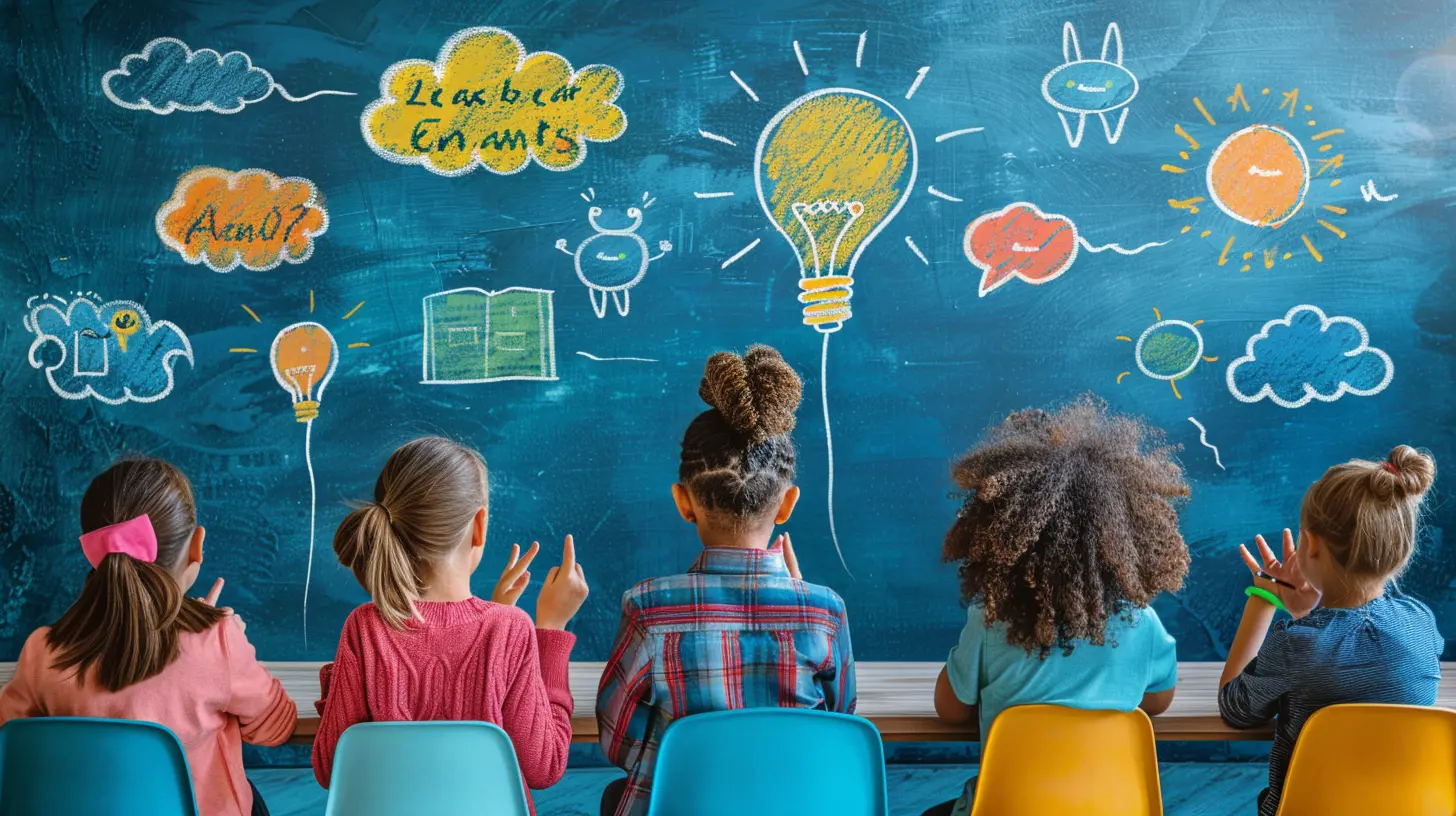
The Evolving Role of the Teacher
From Sage on the Stage to Guide on the Side
Once upon a time, teachers were the sole keepers of knowledge. They stood at the front of the classroom, chalk in hand, delivering lesson after lesson. But in a world overflowing with information, that approach just doesn’t cut it anymore.In inquiry-based learning, the teacher becomes a facilitator rather than a lecturer. Instead of presenting all the answers, they ask carefully-crafted questions that lead students to find the answers themselves. They scaffold the learning process, gently guiding students without taking over.
In simple terms? They take a step back—not to do less, but to let students do more.
The Teacher as a Curiosity Instigator
Ever met a kid who constantly asked, “Why?” It’s adorable the first few times, but it can also drive you up the wall, right? Well, in an IBL environment, that question is music to a teacher’s ears.Teachers in this setting are responsible for stimulating curiosity. They set the stage with open-ended questions, puzzling scenarios, or real-world problems that need solving. They plant the seeds that get students wondering, “What’s going on here?” and “How can I figure this out?”
Example: Instead of teaching the water cycle with a diagram, a teacher might start with, “Why doesn’t the ocean run out of water?” That kind of question invites exploration and multiple paths of investigation.
Creating a Safe Learning Environment
Inquiry is messy. It involves trial and error, and—brace yourself—failure.Teachers need to create a classroom culture where it’s okay to be wrong. Where questions are more important than answers, and where students feel safe enough to take intellectual risks.
This means building trust, encouraging respectful discussion, and celebrating the process, not just the product.
Guiding the Inquiry Process
Designing Inquiry Experiences
A teacher doesn’t just show up and say, “Be curious!” and let the chips fall where they may. Successful IBL requires thoughtful planning.Teachers design inquiry-based activities that align with curriculum goals while allowing student choice and autonomy. This could involve:
- Scenario-based projects
- Problem-solving challenges
- Hands-on experiments
- Collaboration with peers or community experts
These experiences need to be rich enough to spark questions but grounded enough to connect with core learning outcomes.
Supporting Without Solving
Here’s a tricky balance: teachers have to be there to support, but not to solve.They might offer hints, prompt reflection, or suggest resources. But they don’t step in and hand over the answer. Why? Because that would rob students of the very experience IBL is meant to provide—learning how to learn.
It’s like helping a kid ride a bike. You guide them, maybe steady the handlebars, but eventually, you have to let go and trust they’ll find their balance.
Assessing Progress in a Non-Traditional Way
Assessment in IBL doesn’t always look like a quiz or multiple-choice test.Teachers observe discussions, review journals, analyze projects, and have one-on-one conversations to understand how students are progressing. They look for critical thinking, problem-solving, and the ability to transfer knowledge.
Rubrics, self-assessments, and peer feedback often take center stage. It’s not just about what students know—it’s about how they use what they know.
The Emotional Work of Teaching in IBL
Let’s talk about the human side of teaching for a second.Stepping into this type of role requires teachers to embrace a bit of uncertainty. It’s not easy to give up control. It’s vulnerable to say, “I don’t know—let’s find out together.” And it takes emotional labor to be tuned in to each student's learning journey.
But it’s also incredibly rewarding. Watching a student light up as they connect the dots or proudly share a project they built from scratch? That’s the good stuff.
Challenges Teachers Face in IBL
We’d be lying if we said inquiry-based learning is all sunshine and rainbows. There are real challenges, including:- Time Constraints: Inquiry takes longer than direct instruction. There’s no getting around that.
- Classroom Management: Students working on different paths can get chaotic.
- Curriculum Pressure: Teachers often feel torn between inquiry and covering content needed for standardized tests.
- Lack of Professional Development: Many teachers haven’t received adequate training in facilitating inquiry effectively.
But here’s the thing: when schools and educators commit to the long game, the payoff is huge. Students walk away with not just knowledge, but a toolkit of skills—critical thinking, collaboration, creativity, and confidence.
Building Strong Teacher-Student Relationships
In an IBL context, the relationship between teacher and student shifts dramatically.It becomes more collaborative. Teachers aren’t authority figures delivering mandates—they’re mentors walking alongside learners. There’s more dialogue, more listening, and more mutual respect.
Students often feel more seen and heard in this environment, which boosts engagement and motivation. When students know their questions matter, they’re far more likely to lean in.
Tech and Inquiry: A Powerful Duo
Technology, when used intentionally, can be a powerful ally in inquiry-based learning.Teachers can use tools like Google Workspace, Padlet, Flip, and Jamboard to facilitate discussion, document progress, and encourage reflection. Online databases and digital simulations can open up opportunities for inquiry that weren’t possible even a decade ago.
But again—it’s not about the tool. It’s about how the teacher uses the tool to promote deeper inquiry.
Final Thoughts: Why the Teacher Still Matters
We live in a world where information is everywhere—available at the tap of a screen. So you might wonder: why do we even need teachers?Here’s why: information isn’t the same as wisdom. Students need someone who can help them make sense of complexity, connect the dots, and push their thinking further. Someone to ask the right questions, to challenge assumptions, and to cheer them on when the going gets tough.
In an inquiry-based environment, the teacher's role evolves—but it becomes more powerful, not less.
They don’t give answers. They give students the tools to find their own.
And honestly? That might just be the most important role of all.
Quick Recap: What Do Teachers Do in IBL?
- Spark curiosity with intriguing questions- Design meaningful, student-centered learning experiences
- Guide investigations without giving it all away
- Create a safe space for exploration and failure
- Assess learning in flexible, creative ways
- Build strong, collaborative student relationships
- Integrate tech thoughtfully to deepen inquiry
In short, they nurture lifelong learners.
Final Takeaway
Great teachers have always been more than lecturers. In inquiry-based classrooms, they become facilitators of wonder, architects of meaningful inquiry, and partners in the learning process.It’s not about stepping back—it’s about leveling up.
all images in this post were generated using AI tools
Category:
Inquiry Based LearningAuthor:

Olivia Lewis
Discussion
rate this article
1 comments
Quincy Stone
I really enjoyed this article on the role of the teacher in inquiry-based learning. It highlights how essential teachers are in guiding students through exploration and discovery. The insights shared here can help educators foster a more engaging and supportive environment for their students' learning journeys. Great read!
August 4, 2026 at 4:23 AM