The Future of E-Libraries and Digital Textbooks by 2027
18 May 2026
You know that feeling when you lugged a backpack full of textbooks around campus? Your shoulders ached, the spine of the book cracked, and you probably had a highlighter bleeding through three pages. That physical weight is disappearing. By 2027, the shift from printed pages to pixels will feel less like a novelty and more like the default. We are not just talking about swapping paper for a screen. We are talking about a complete overhaul of how we access, interact with, and even think about knowledge.
E-libraries and digital textbooks have been around for a while, sure. But the next three years will be the tipping point. Why? Because the technology is finally catching up to the promise. We are moving past simple PDF versions of printed books. We are entering an era where the textbook is alive, the library is a network, and learning is deeply personalized. Let's break down exactly what this looks like and why it matters for students, teachers, and anyone who still buys a book.
The Death of the Static PDF
Right now, many "digital textbooks" are just scans. You scroll, you zoom, you squint. It is a poor imitation of the real thing. By 2027, that model will be dead. The new standard is a dynamic, interactive document. Imagine a biology textbook where you don't just read about the Krebs cycle. You tap a diagram, and a 3D model spins in your browser. You pinch to zoom into a mitochondrion. You watch a short animation of the process without leaving the page.This is not science fiction. Publishers like Pearson and McGraw-Hill are already investing heavily in "adaptive learning" platforms. These are not books anymore. They are software. They track what you understand and what you don't. If you keep getting questions about cellular respiration wrong, the system will serve you more content on that topic. It will link you to a video, a quick quiz, or a different explanation. The textbook becomes a tutor.
This shift is huge. It means the "one-size-fits-all" textbook is going away. In 2027, a digital textbook will feel different for every student. It will adapt to their pace, their learning style, and their weaknesses. It is like having a private tutor embedded in the cost of the course materials. And the best part? Updates happen instantly. No more buying a new edition just because the publication date changed. The content is always current.
E-Libraries as Living Networks
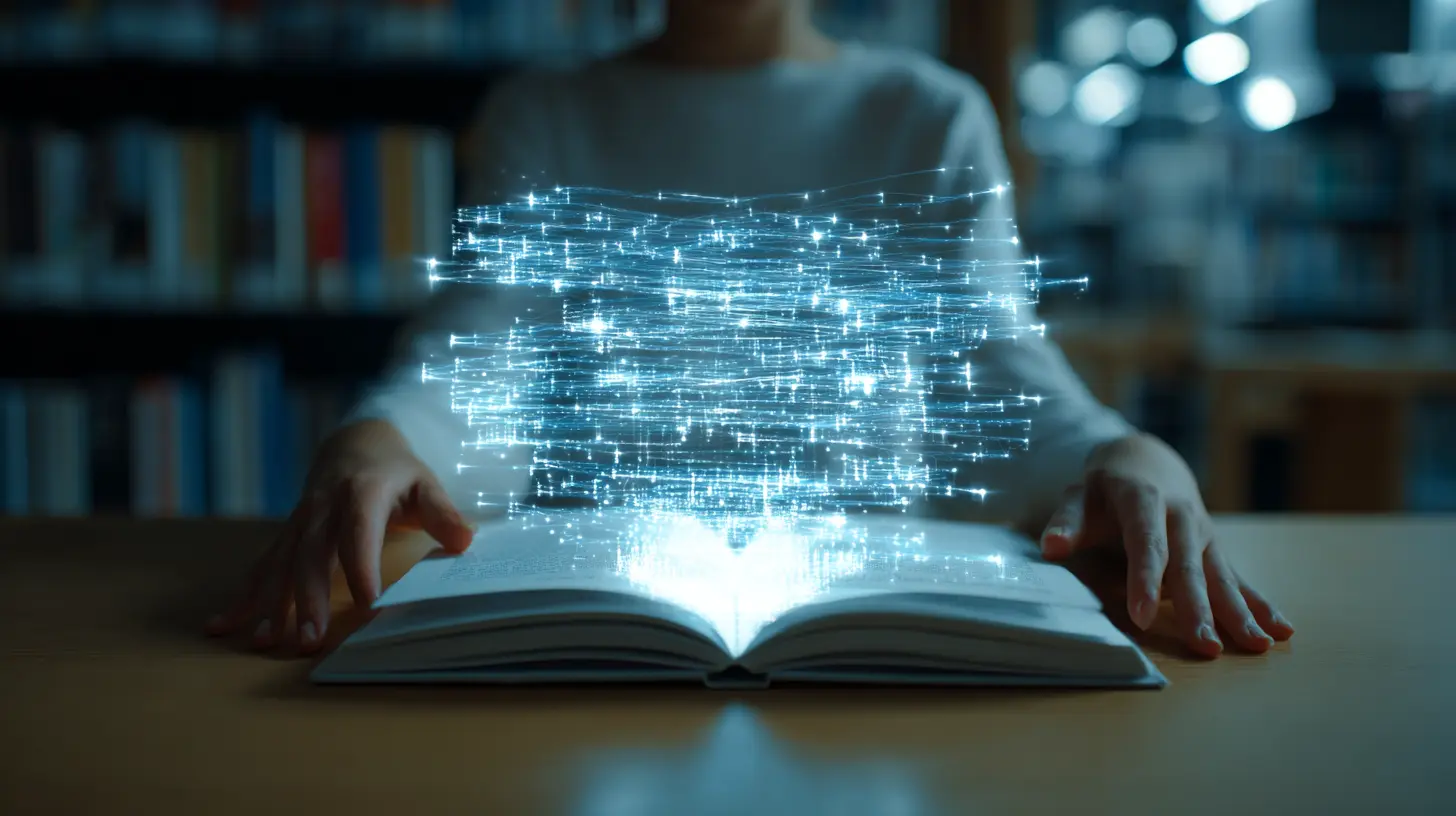
Think of a traditional library. It is a building with shelves. You go there, you find a book, you sit in a quiet corner. An e-library today is often just a digital catalog of those same books. But by 2027, the e-library will transform into something closer to a social network for knowledge.We are already seeing the early signs. Platforms like JSTOR and Project MUSE are expanding. But the future e-library is not just a repository. It is a collaborative space. Imagine logging into your university's e-library. You search for a topic. Instead of just a list of results, you see the most cited articles, the most discussed papers, and even annotations left by other students and professors.
This is where "social reading" comes in. In 2027, you will be able to highlight a passage in a digital textbook and see a pop-up showing what five other students in your class thought about it. You can start a discussion thread right there on the page. The professor can drop in a comment or a clarification. The library becomes a conversation, not a monologue.
This is a massive shift in pedagogy. We learn better when we talk about what we read. The static page prevented that. The living e-library encourages it. It bridges the gap between reading and studying. It also solves a major problem: the "lonely learner." When you study alone at 2 AM, you feel isolated. With a social e-library, you are never truly alone. You are part of a learning community that exists inside the text itself.
The Economics of Access
Let's talk money. Textbooks are absurdly expensive. A single chemistry book can cost $300. By 2027, this model is going to crack wide open. The rise of "inclusive access" programs is already forcing change. These are deals where the university pays a flat fee per student for all digital materials. The student pays a much lower fee bundled into tuition. This is great for the student, but it is a nightmare for publishers who relied on selling used books.The real revolution, however, is the "unbundling" of the textbook. Why buy an entire 800-page book when you only need three chapters? In 2027, you will be able to purchase exactly the content you need. You will buy a "module" or a "unit." This is like buying a single song instead of the whole album. It is cheaper, it is faster, and it is more efficient.
E-libraries will also drive this. Open Educational Resources (OER) are free, openly licensed textbooks. They are already gaining traction. By 2027, many universities will have entire degree programs using OER materials. The library will not just host these. It will curate them, remix them, and create custom textbooks for specific courses. Imagine a professor building a textbook from scratch using free chapters, articles, and videos from the library's collection. That is the future. It is personalized, affordable, and controlled by educators, not publishers.
The Hardware Revolution
We cannot talk about digital textbooks without talking about the devices. Right now, a laptop is okay, but a phone is too small for serious reading. By 2027, the hardware will catch up. We are seeing the rise of foldable screens and e-ink tablets that can handle color and video. Devices like the reMarkable tablet or the Boox series are already moving toward this.Imagine a device as thin as a notebook, with a screen that looks like paper but can also display full-color animations. You can write on it with a stylus, highlight text, and search across thousands of books instantly. The battery lasts for weeks. That is not a fantasy. That is the trajectory.
For students, this means one device for everything. No more carrying a laptop for typing and a tablet for reading. The future device will be a hybrid. It will be an e-reader, a notebook, and a computer all in one. This solves the "eye strain" problem that has plagued digital reading for years. New screen technology with adjustable warm light and higher refresh rates makes reading for hours feel natural.
The Role of AI and Search
Here is where things get really interesting. By 2027, the e-library will not just be a place you search. It will be a place that searches for you. Artificial intelligence will act as a research assistant. You are writing a paper on climate policy. You type a question into the library's search bar. Instead of giving you a list of 10,000 results, the AI reads your question, understands the context, and returns a curated set of five articles, three book chapters, and two video lectures.This is not just a better search engine. It is a reasoning engine. It can find connections between different disciplines that you might miss. It can suggest a book from the economics section that relates to your chemistry paper. It can summarize a dense 50-page chapter into three bullet points. This is a massive time saver.
But there is a risk here. We need to be careful that the AI does not filter out the difficult or uncomfortable ideas. The best learning happens when you stumble upon something unexpected. The AI needs to be a guide, not a gatekeeper. By 2027, the best e-libraries will balance automation with serendipity. They will let you browse randomly, just like you used to wander the stacks in a physical library.
The Death of the "Course Packet"
Remember those printed course packets? The ones with the ugly spiral binding and the photocopied articles? They are gone. By 2027, the course packet is a digital playlist. Your professor will create a collection of readings, videos, and interactive modules. You access it from the e-library. It updates in real time. If a new study comes out mid-semester, the professor adds it. You get a notification.This is a huge shift in curriculum design. It makes the course a living document. It also solves the problem of outdated information. In fast-moving fields like computer science or medicine, a textbook written two years ago is ancient history. The digital course packet keeps the class current. It also allows for more diverse voices. Instead of relying on one expensive textbook, the professor can include a blog post from a working professional, a podcast interview, and a research paper from an open-access journal.
Accessibility and Equity
This is the most important part. Digital textbooks and e-libraries can level the playing field. For students with disabilities, the future is bright. Text-to-speech is already good. By 2027, it will be seamless. A student with a visual impairment can have the entire library read aloud with natural-sounding voices. A student with dyslexia can adjust the font, spacing, and background color for every text.But we also have to talk about the digital divide. Not every student has a reliable internet connection or a modern device. By 2027, this will be a major policy issue. Forward-thinking universities are already loaning out devices and providing mobile hotspots. The e-library of the future must be accessible offline. You should be able to download your entire semester's reading list in one click and access it without Wi-Fi.
The promise here is that a student in a rural area with a slow connection can have the same access as a student in a wired dorm. The technology exists. The challenge is implementation. By 2027, we will see more legislation and institutional commitment to making digital access a right, not a privilege.
The End of "Selling Back" Books
Remember the end-of-semester ritual? You stand in a long line to sell your textbooks back to the bookstore for a fraction of what you paid. By 2027, that ritual is obsolete. With digital textbooks, you do not own a physical copy. You have a license. That license is often non-transferable. This sounds bad, but it actually opens up new models.Some platforms will allow you to "trade in" your license for credit toward next semester's materials. Others will have subscription models. Pay a monthly fee and get access to the entire library. This is like Spotify for textbooks. It is cheaper than buying individual books, and it ensures you always have the latest edition.
The subscription model is already gaining traction. By 2027, it will be the norm for many students. You pay one fee, and you get unlimited access to thousands of titles. This is a game-changer for graduate students and researchers who need to read widely across many disciplines. It also kills the used book market completely. But honestly, is that such a loss? The used book market was exploitative anyway.
The Human Element
Let's be clear. Technology is a tool. It cannot replace the human connection of a good teacher or a passionate librarian. The future of e-libraries is not about removing people. It is about empowering them.Librarians will become data curators and digital navigators. They will help students learn how to search effectively, how to evaluate sources, and how to use AI tools responsibly. They will be the human face of the digital library. Professors will become designers of learning experiences, not just lecturers. They will use the data from adaptive textbooks to see where students are struggling and adjust their teaching in real time.
The best part? The physical library will not disappear. It will evolve. It will become a makerspace, a collaboration zone, and a quiet place to think. The books will be digital, but the community will remain. By 2027, the library is not a building full of books. It is a network of people and ideas, accessible from anywhere.
A Practical Look at 2027
So, what does a typical day look like for a student in 2027?You wake up, grab your lightweight foldable tablet. You open your e-library app. The AI assistant reminds you that your physics quiz is tomorrow. It has already pulled up the relevant chapters from your digital textbook. You start reading. You come across a confusing concept. You tap the word, and the AI explains it in simpler terms. You take a quick practice quiz. The system sees you got three questions wrong. It automatically queues up a short video and a different explanation.
You have a study group later. You share your annotations with your friends. They see your highlights. You see theirs. You all discuss a point in the chat window that is embedded directly in the textbook. The professor drops in to clarify a point.
At the end of the semester, you do not have a pile of books to sell. You have a digital library of your own. Every text you have ever read is searchable. Your annotations are saved. Your notes are linked to the exact passages. You can return to any concept in seconds.
This is not a dream. This is the trajectory. By 2027, the future of e-libraries and digital textbooks is not about replacing paper. It is about making knowledge more accessible, more interactive, and more human. And honestly? It is about time.
all images in this post were generated using AI tools
Category:
Education And TechnologyAuthor:

Olivia Lewis
Discussion
rate this article
1 comments
Nicole Bishop
This article offers great insights into the evolving landscape of e-libraries and digital textbooks. Exciting changes are ahead for education by 2027!
May 21, 2026 at 3:50 AM
Olivia Lewis
Thank you for your feedback! I agree, the future looks promising for e-libraries and digital textbooks. Exciting times ahead!